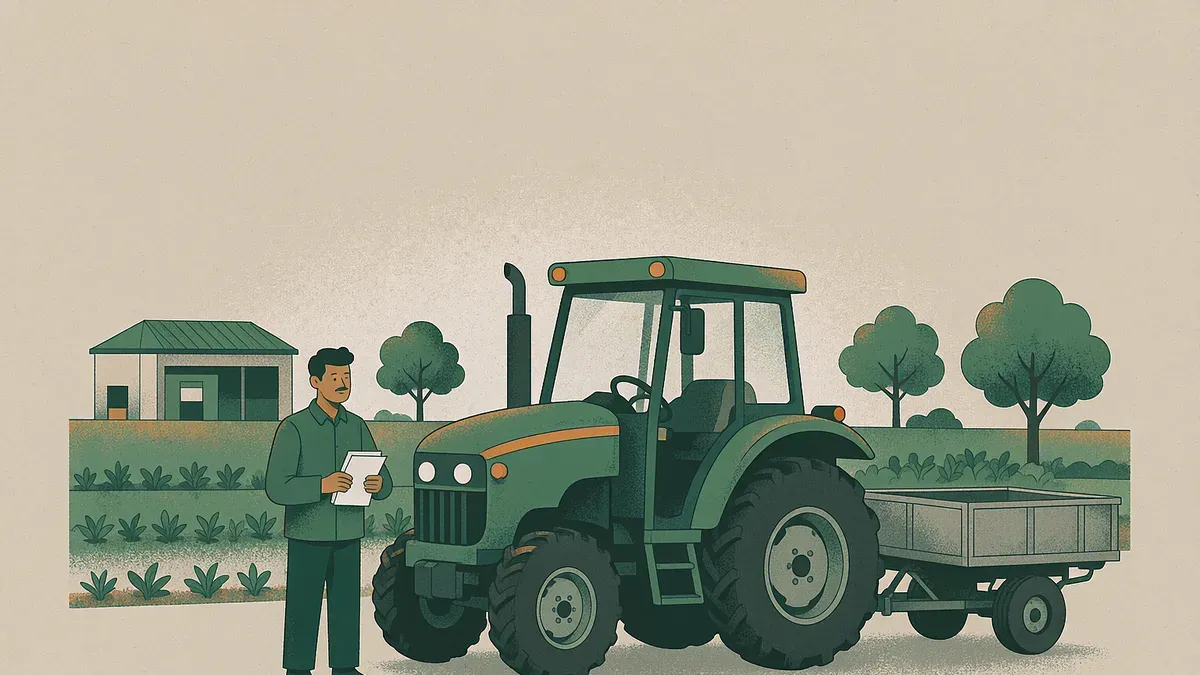
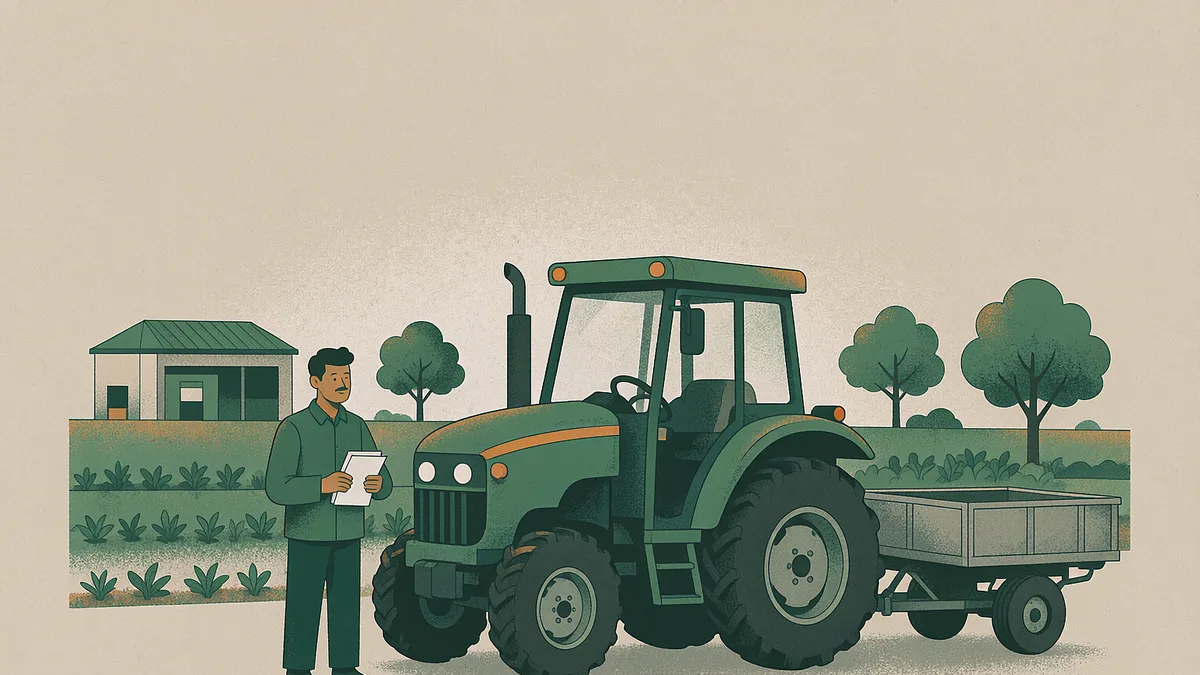
A tractor is registered like any other motor vehicle, but the decisions around it are different from a car’s. The same machine can be a farm vehicle, a haulage unit or the front half of a goods combination, and each use changes the tax class, the inspection routine and the papers the vehicle needs. A trolley or trailer adds a second unit to the file. This guide covers the registration steps, the class question that drives everything else, and the points where owners of agricultural vehicles most often get caught.
Three units, up to three records
The tractor is the unit everyone registers. The trolley or trailer it pulls is a separate structure with its own frame, its own load body and, in most provinces, its own registration particulars and number plate. A trailer has no engine, but it still carries a load on a public road and needs to be identifiable. Treating the trailer as an accessory to the tractor is the most common mistake in this category, and it shows up when a trailer is stopped, insured or sold.
A trailer built in a workshop is where the paperwork gets thin: often no sale invoice, no frame plate, no record of the builder. Ask the district office what it will accept as proof of the frame number before you register one.
Which class applies
This is the question to settle first, because it decides the token tax rate, whether a fitness certificate is needed, and whether a route permit or goods carriage permission is required.
An agricultural tractor works on and around its own land. A tractor that hauls produce, bricks, sand or machinery for payment is a commercial vehicle, even when it looks identical to the one on the next farm. Khyber Pakhtunkhwa’s published penalty schedule makes this explicit with a separate penalty for a tractor “not being used for agricultural purposes”.
| Unit and use | What the record shows | Recurring charges | Fitness and permits |
|---|---|---|---|
| Tractor, own farm only | Agricultural tractor, private use | Token tax at the agricultural rate, exempt in some provinces | Usually none, unless the province requires inspection by age |
| Tractor, hauling for hire | Commercial tractor | Commercial token tax, plus income tax where applicable | Fitness certificate, renewed on the commercial cycle |
| Tractor with trolley, farm use | Tractor plus trailer particulars | Agricultural rate for the tractor, trailer rate where the province taxes trailers | Depends on whether the combination goes on public roads for hire |
| Tractor with trolley, hire work | Commercial combination | Commercial rates for both units | Fitness for both, plus goods carriage permission |
| Goods trailer towed by a truck | Trailer as its own registered unit | Trailer token tax, commercial class | Fitness certificate, and route permit where the operator holds one |
The class is set by the work. Putting a tractor that was registered as agricultural onto hire work means changing the record before it starts earning.
Registering the tractor
- Confirm the district that will hold the file. Registration is a district office function, and an agricultural tractor bought in another district is usually registered where the owner lives or where the land is.
- Take the sale invoice and sale certificate from the dealer or manufacturer, your CNIC, proof of residence and the application form the district uses. Islamabad builds the file on Form F, signed by the applicant after the particulars are entered.
- Present the tractor for physical inspection. The examiner checks the engine number, chassis number, make, model and colour against the invoice. A repainted or re-engined tractor is checked more closely for exactly that reason.
- Pay the registration fee, the number plate charge and any withholding tax in one visit where the office allows it. Islamabad’s published formula is registration fee plus advance tax plus token tax plus income tax, with professional tax added for a commercial vehicle.
- Collect the registration book or smart card and the plates. Khyber Pakhtunkhwa’s published plate package for a tractor includes a pair of 400 by 200 mm plates, the registration book, a third plate and scanning.
- Register within 60 days of purchase or import. Khyber Pakhtunkhwa applies a penalty after that window, and the penalty steps up once the default passes six months.
What the fees look like
Khyber Pakhtunkhwa publishes its registration fees by category on the provincial excise site, and the tractor line is unusual because it is a flat charge rather than a percentage of value.
| Category in the KP schedule | Registration fee |
|---|---|
| Tractor | Rs 1,000 flat |
| Motorcycle or scooter | 1% of vehicle value |
| Car, jeep, van or pickup up to 1300cc | 1% of vehicle value |
| Car, jeep, van or pickup from 1300cc to 2500cc | 2% of vehicle value |
| Car, jeep, van or pickup above 2500cc | 4% of vehicle value |
| Truck, bus, commercial van, single cabin pickup, motor cab rickshaw or tricycle | 1% of vehicle value |
Punjab and Sindh publish their own schedules and process tractors at the district excise office. Balochistan separates an agricultural tractor from a tractor with a trolley and lists trailers on their own line. Islamabad uses the same Form F sequence. Confirm the rate on the challan before you pay.
Trailers, trolleys and fitness
Once a trailer or trolley carries goods for payment, it joins the commercial fleet in the eyes of the inspection system. That means a fitness certificate for the trailer itself as well as the tractor, and a look at the load body, the coupling, the brakes where fitted, the lights and the reflective markings. A trailer with a rotten deck, a cracked drawbar or no working tail lamps fails on the same grounds as a truck.
Two practical points follow. Keep the trailer’s own papers with the combination, because a checkpoint that accepts the tractor’s book will still ask what the trailer is. Check the load rating against what the combination actually carries: an overloaded trolley is stopped for the load, and the fitness certificate does not protect against it.
For a tractor used for haulage, the driver also needs the commercial tractor licence class rather than the agricultural one. The licence question is separate from registration and is covered in the guide to commercial licence classes on this site.
Buying a used tractor or trolley
Verify the record before paying, in the same way you would for a car. Check that the engine number on the block matches the book, because tractors are re-engined more often than cars and the change is not always recorded. Look at the chassis number stamp for grinding or fresh paint, which suggests it has been altered. If the tractor is described as agricultural but has been hauling for hire, expect the tax class to be revisited at transfer.
For the trailer, ask for its own registration particulars and check the frame number against the plate. A trailer sold with no papers is priced as scrap for a reason: registering it later depends on the district office accepting a frame number that nobody can source.
Note: Provincial treatment of agricultural vehicles changes with each finance act. Confirm three things with your district excise office before you buy or register: the class your use attracts, whether a fitness certificate is required for that class, and whether the trailer needs its own registration in that province.
The sequence is short. Settle the class with the office, register the tractor and the trailer as separate units, then keep the fitness and tax dates for both on one calendar. A tractor that is legal to own but not legal to hire out cannot earn, and that difference is decided on paper before it reaches a road.