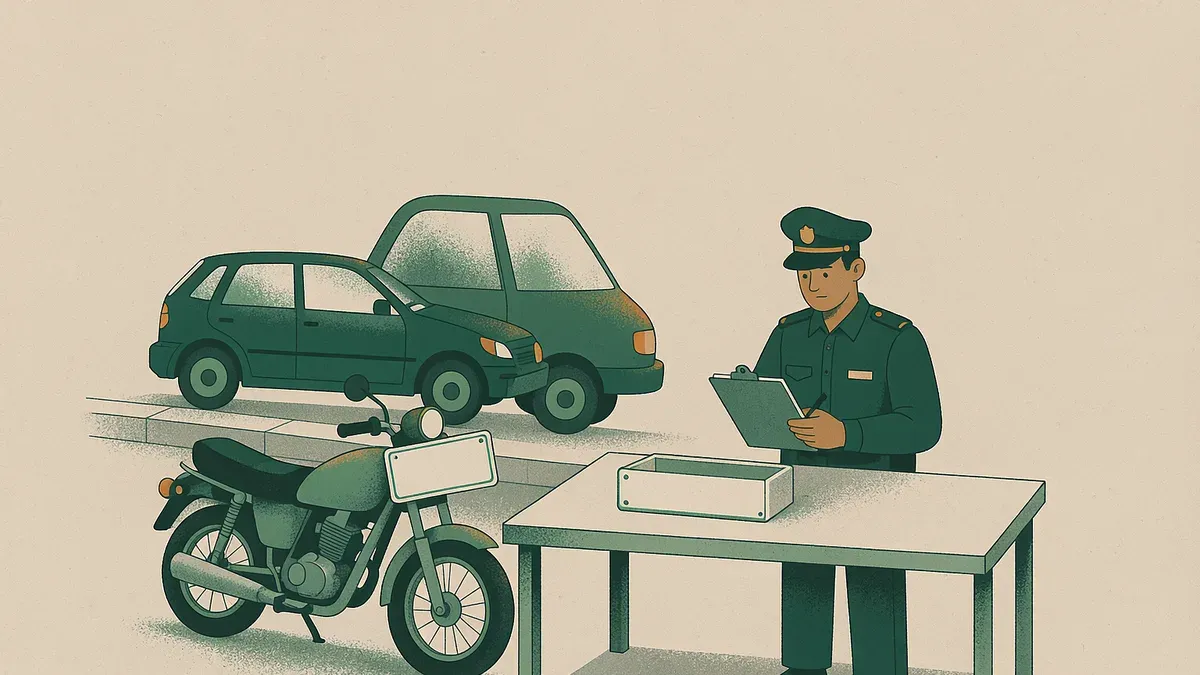
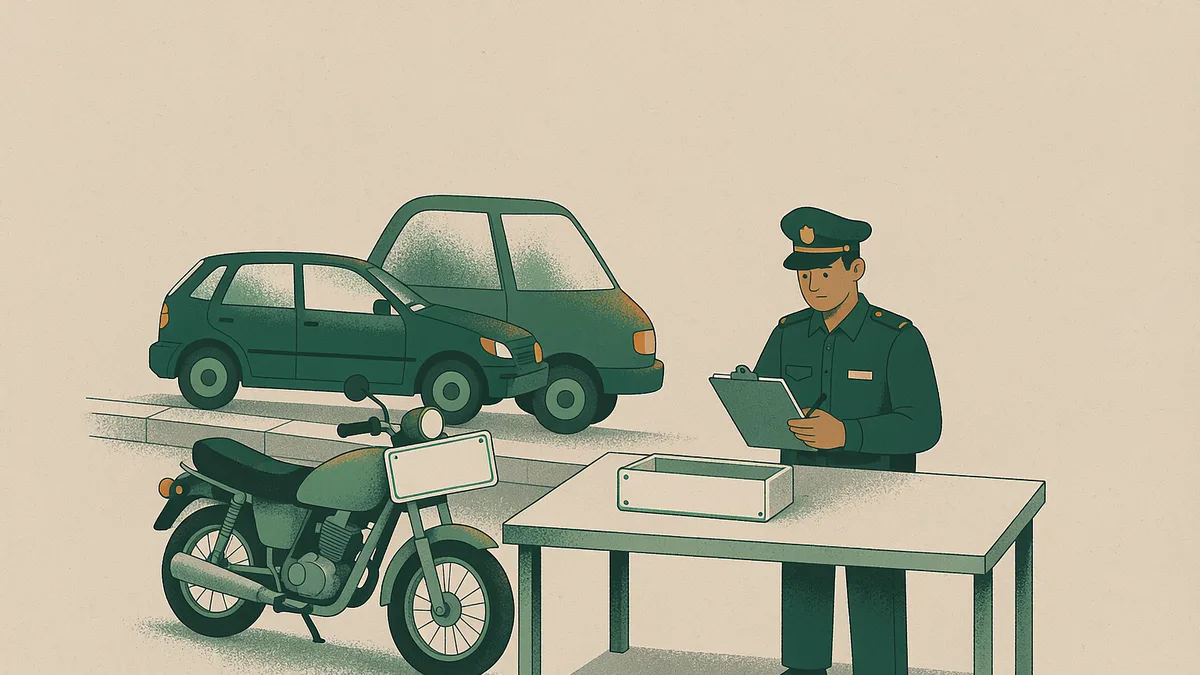
A number plate can disappear in a minute: a theft in a car park, or a plate bent beyond reading after a scrape. The registration itself is unaffected. What changes is how easily the vehicle can be identified, and that is the part that causes trouble at a checkpoint, a toll plaza, a parking scheme or an insurance survey. This guide covers the first day, the replacement route in each province, and what to keep in the vehicle while a new plate is being made.
The plate is not the registration
The registration number lives in the excise record, tied to the chassis and engine numbers and the owner’s CNIC. The plate is a visible copy of that number. Losing it does not cancel the registration, require a transfer, or change the token tax position.
Replacing a plate therefore does not mean replacing the registration book or smart card. You are ordering a physical marker that must carry the same number and match the format your province requires. If someone offers to change the number to make the process easier, leave. A new number means a new registration entry, and that is a different transaction with its own file and fees.
The first day: stolen, lost or damaged
The report you file depends on what happened.
- Stolen. Go to the nearest police station and file an FIR. Ask for a copy with the station stamp and the crime number. Tell your insurer if the vehicle has comprehensive cover, because a stolen plate can be used to clone the vehicle or to run up charges against your registration number.
- Lost. File a police lost report. Some stations issue a simple report rather than an FIR, and some excise offices also ask for an affidavit.
- Damaged. Keep the broken plate. Do not throw it away, because Sindh asks for the old plate at collection even when it is in pieces, and a photograph of the damage helps if anyone questions why the plate was replaced.
| Situation | Report to file | Keep |
|---|---|---|
| Plate stolen | FIR at the nearest police station | FIR copy, crime number, insurer reference |
| Plate lost, vehicle secure | Police lost report | Report copy, CNIC, registration card |
| Plate broken | No police report needed in most cases | The broken plate and a photo of it |
Report the loss even if the plate later turns up. A plate in someone else’s hands can collect challans, tolls and fuel purchases against your registration number, and the police report is what lets you unwind those entries.
Punjab: plates are made to a format
Punjab no longer runs a central plate production line. The Excise, Taxation and Narcotics Control Department stopped charging a government plate fee and told traffic police in February 2026 to check whether a plate matches the provincial format, not whether it came from a government supplier. Owners now have plates made by private vendors to the approved design.
That changes the job from filing an application to checking a specification. The plate must carry the correct number in the approved font and spacing, on the approved background, with the correct size for the vehicle class. A decorative font, a tinted background, a cut-down car plate on a motorcycle or a plate with the wrong spacing is still a challan risk even though private production is allowed.
Take the registration card to a vendor who has made plates for your vehicle type before, and compare the finished plate with the format shown by the district excise office. Fit it front and rear, and keep the old plate until the new one is secure.
Before paying anyone who claims to sell an official plate, confirm the position at the district excise office. The fee for a government plate no longer exists in Punjab, so a demand for one is a warning sign.
Sindh: apply for a replacement
Sindh still issues plates through the Excise, Taxation and Narcotics Control Department, and the application can be started online through the department’s portal or at a district office. Three conditions decide whether the application moves: the vehicle must be registered in the applicant’s name, the taxes must be clear, and the old plate must be surrendered when the new one is collected.
The online route asks for the mobile number and registration number, then offers a replacement plate and a collection branch. Pay through the payment slip or challan shown at that stage, keep the receipt, and track the application under the plate status section of the portal. The fee is shown before payment, and it differs for cars and motorcycles.
At collection, bring the original vehicle file, the CNIC and the old plate, even if it is broken. If the plate was lost rather than damaged, the application is treated as a duplicate, and the police report goes with the file. A vehicle still recorded in the previous owner’s name will be sent back for a transfer first.
Other provinces and what to carry meanwhile
Islamabad handles registration and plates through its Excise and Taxation Department offices and its online services. For a lost or damaged plate, apply at the excise office with the CNIC, the registration card or smart card, and the police report. The PAK ID app shows the digital vehicle record, which helps while the physical documents are being replaced, but a phone screen is not a plate.
Khyber Pakhtunkhwa and Balochistan run their own excise departments with district offices. The documents are similar, and the plate stock and format are provincial. Call the district office before travelling, because not every office handles plate work daily.
| Province | Where the plate is handled | Take with you |
|---|---|---|
| Punjab | Private vendor to the provincial format, after confirming the design with the district excise office | Registration card, CNIC, old plate, FIR or lost report if missing |
| Sindh | Excise department, online portal or district office | Registration card, CNIC, tax proof, old plate, police report for a lost plate |
| Islamabad | Excise and Taxation Department office | CNIC, registration card or smart card, police report |
| Khyber Pakhtunkhwa | District excise office | CNIC, registration card, police report, old plate if damaged |
| Balochistan | District excise office | CNIC, registration card, police report, old plate if damaged |
While the new plate is being made, keep the police report, the application receipt or payment slip, and the registration card in the vehicle. Those documents explain the missing plate and connect the vehicle to its record. They do not make a missing plate legal, so fit the new one as soon as it is ready.
Do not use a painted board, a cardboard copy, a paper printout or a plate borrowed from another vehicle. Each of those turns a paperwork problem into a misrepresentation problem, and a borrowed plate can pull the other vehicle’s challans and tax record into your stop.
Mistakes that turn into challans
The failures are predictable. A vendor uses a font or spacing that looks close but does not match the provincial format. A motorcycle gets a plate sized for a car. The old plate is left on the vehicle after a replacement, so the vehicle carries two identities. The theft is never reported, and the first e-challan against the number arrives weeks later. A damaged plate is straightened and refitted with the number partly unreadable.
A plate also matters at inspection and at sale. A fitness inspector can fail a vehicle with an unreadable plate, and a buyer checking the record will compare the plate on the vehicle with the registration card. A mismatch that could have been fixed with a police report and a vendor visit becomes a reason to renegotiate the price.
Replace the plate to the current provincial format, keep the police report and the application receipt together, and check that the number on the new plate matches the registration card before you drive away.