
Fitness
How to Apply for a Vehicle Fitness Certificate in Pakistan: Documents, Fee, Inspection and Collection
Key takeaways
- Assemble registration, CNIC, token tax proof and prior certificate first.
- Fitness charges are set per province and vehicle class, so confirm the current schedule.
- Book early and arrive with a clean, fuelled, electrically sound vehicle.
- Ask for the written defect list if the vehicle fails, then re-apply.
Applying for a vehicle fitness certificate in Pakistan follows a predictable sequence: gather documents, pay the fee, book an inspection slot, present the vehicle, and collect the certificate or a written reason for refusal. The process is managed by the provincial excise and taxation department, and while the exact forms and portals differ between Punjab, Sindh, Khyber Pakhtunkhwa, Balochistan and the Islamabad Capital Territory, the underlying steps are the same everywhere.
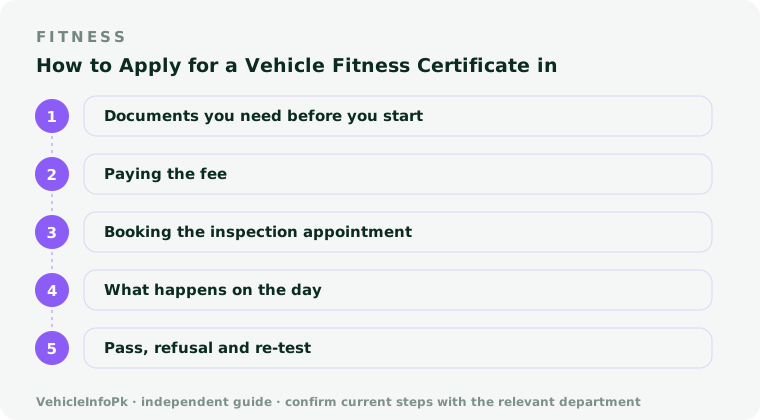
Documents you need before you start
Most applications fail or stall because of paperwork rather than mechanics. Assemble the following first:
- Original registration book or smart card for the vehicle, showing the current recorded owner.
- CNIC of the owner, or of the authorised representative applying on their behalf.
- Previous fitness certificate, if the vehicle has been certified before — the inspector will want the earlier record.
- Token tax receipt for the current period, since outstanding dues commonly block an application.
- Insurance details where the province or vehicle class requires them.
- Route permit and any other operating authority, for commercial vehicles.
If the vehicle is registered in a name other than the person applying, bring the transfer or authority paperwork that explains why. An inspector cannot certify a vehicle against documents that do not match the applicant.
Paying the fee
Fitness inspection charges are set by each province and are revised from time to time, and they differ by vehicle class — a motorcycle, a private car, a bus and a heavy goods vehicle are not charged on the same scale. Do not rely on a figure a friend quotes or one you find in an old forum thread. The fee is normally generated as a payment slip or PSID against your vehicle registration number, and it is payable through the channels the provincial department lists on the payment slip itself.
Keep the paid original. The receipt is usually required at the inspection appointment and again when you collect the certificate.
Booking the inspection appointment
Once the fee is paid, you book a slot at a designated inspection station or through the provincial fitness or inspection portal. Slots are limited, so book as early as you can and avoid leaving renewal until the expiry week. When you book:
- Choose a slot that gives you time to prepare the vehicle properly rather than the earliest available one.
- Confirm which inspection station the slot is attached to, and check its timings.
- Note the booking reference and bring it, printed or on your phone.
- Plan to arrive early; stations work through queues and late arrivals are often moved to the end.
What happens on the day
At the station, the vehicle's documents are checked first and the registration number and chassis number are matched to the record. The vehicle then goes through the physical inspection: brakes and braking balance, steering and suspension play, headlights, indicators, brake lights and reflectors, tyre condition and tread depth, windscreen and glass, mirrors, wipers, horn, seat belts, exhaust and smoke or emissions, and the overall condition of the body and frame. For commercial vehicles, passenger safety fittings and load body condition are also examined.
A vehicle presented dirty, with a flat battery, or with obvious warning lights showing creates a poor impression and can make a mechanical check harder to complete. Arrive with fuel, working electrics and the vehicle washed well enough for the inspector to see lamp lenses and tyre sidewalls.
Pass, refusal and re-test
If the vehicle meets the standard, the certificate is issued for the applicable validity period. If it does not, you should be given the reasons — a defect list identifying what failed. Typical refusal reasons include ineffective or unbalanced brakes, worn or mismatched tyres, non-functioning lights, damaged or heavily tinted glass, excessive smoke, missing seat belts, and structural corrosion or body damage.
Fix the listed defects, then re-apply. Some provinces allow a re-inspection within a short window; others treat it as a fresh application with a fresh fee. Ask the station directly what applies to your case, because the answer varies.
Once your certificate is in hand, record the expiry date immediately and set a reminder well before it lapses — for commercial operators, that date is one of several compliance deadlines worth tracking together.
Keep reading
Vehicle Fitness Certificate in Pakistan: What It Is, Who Needs One and How It Differs From Registration and Token Tax
A vehicle fitness certificate proves roadworthiness. Learn who needs one in Pakistan, how long it stays valid, and how it differs from token tax.

Fitness Certificate Validity in Pakistan: How Long It Lasts and When It Starts
Fitness certificate validity is set by the authority and differs by class and province. Learn when it starts, when it ends, and the expiry gap.

Documents Required for a Fitness Certificate in Pakistan
The fitness certificate document set covers registration book, CNIC, token tax clearance and route permit, and what to do if one is missing.