
Fitness
Fitness Certificate Validity in Pakistan: How Long It Lasts and When It Starts

Key takeaways
- The validity period is set by the provincial authority and differs by vehicle class and age.
- The period runs from the certificate issue date, not the application or payment date.
- Commercial vehicles are inspected on a tighter cycle than private cars.
- Renew before the expiry date so the vehicle is never left uncertified.
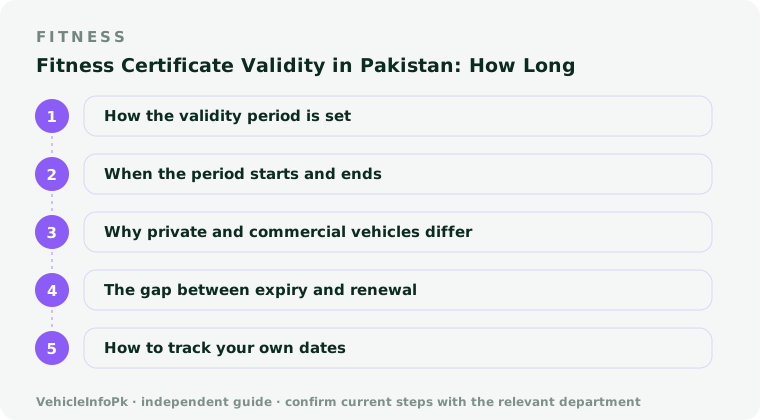
A fitness certificate in Pakistan is valid for the period that the relevant authority sets for your vehicle class, and that period is not uniform: provincial rules, the age of the vehicle and whether it is used privately or commercially all change the answer. Rather than relying on a figure quoted for someone else's vehicle, treat the printed expiry date on your own certificate as the only date that governs you. This guide explains how the period is set, when it starts and ends, why private and commercial vehicles are treated differently, and what happens in the gap between expiry and renewal.
How the validity period is set
Fitness certification is handled provincially, so the span of validity is fixed by the provincial excise and taxation department or the designated inspection authority rather than by a single national rule. Three variables usually drive it:
- Vehicle class. A private car, a goods carrier and a passenger service vehicle do not sit on the same schedule.
- Age of the vehicle. Older vehicles are commonly brought back for inspection more often than newer ones.
- Use. Vehicles carrying passengers or goods for hire are inspected on a tighter cycle because they accumulate far more road wear.
Because schedules are revised from time to time, a period that applied when you last certified your vehicle may not be the period that applies at the next inspection. Confirm the current rule with the relevant authority or on the provincial fitness portal before you plan around it.
When the period starts and ends
The period normally runs from the date the certificate is issued, not from the date you applied or paid the fee. In practice the sequence is: fee is paid, the vehicle is presented, the inspection is carried out, and the certificate is issued with its own issue date and expiry date. The issue date is the one that matters — a delay between payment and inspection does not shorten the certificate, but it does leave you uncertified in the interval.
The period ends on the expiry date printed on the certificate. On that date the vehicle is no longer covered, even if the paper is still in your glove box and even if no reminder reached you. Some authorities also record fitness status against the vehicle record, so an expired certificate can surface during a routine check or a transfer.
Read the expiry date as a hard date, not a month. Planning a renewal in the same month that the certificate lapses leaves no margin for a failed inspection, a re-presentation, or a public holiday at the inspection station.
Why private and commercial vehicles differ
The dividing line is exposure. A commercial vehicle — a bus, coach, van, taxi, rickshaw or goods carrier — runs far more kilometres, carries people or freight for payment, and is held to a higher standard of mechanical condition as a result. It is therefore inspected more frequently, and its certificate is more often tied to other commercial requirements such as a route permit. A private car used by its owner sits at the lighter end: it is inspected less often, and in some provinces only in defined situations rather than on a routine cycle.
This is also why commercial operators should not plan their renewal calendar around the habit of a private car owner. A fleet with mixed use should be tracked vehicle by vehicle, since a private-pattern assumption can leave a commercial vehicle uncertified for weeks.
The gap between expiry and renewal
The interval after the expiry date and before a fresh certificate is issued is the part most owners underestimate. During that window the vehicle is not certified, and the consequences are practical rather than theoretical:
| Situation | What it means in practice |
|---|---|
| Driving after expiry | The vehicle can be stopped and challaned by the traffic police for operating without a required document. |
| Commercial operation after expiry | Enforcement is stricter, and a route permit or other commercial permission may be affected as well. |
| Long lapse before renewal | The authority may require a full fresh inspection rather than a routine renewal, and additional dues can be raised. |
| Renewal attempted with arrears | Outstanding token tax or other government dues against the registration are commonly settled first. |
A short overlap is the safest arrangement: begin the renewal while the current certificate is still live so that there is no uncovered day. Where a certificate has already lapsed, expect a fuller inspection and ask the authority what is required to bring the record back in order.
How to track your own dates
- Note the issue and expiry dates from the certificate itself, and photograph it so the dates survive a lost paper.
- Set a reminder well before the expiry date, allowing time for a failed inspection and a second visit.
- Check the vehicle record on the provincial portal for fitness status and any outstanding dues before you book.
- Where available, check whether the certificate period has been recorded digitally against the registration or smart card.
- Keep the renewal receipt with the vehicle documents until the new certificate is in hand.
Confirm the validity period that applies to your vehicle class and province before you assume how long you are covered, and use the expiry date printed on your own certificate as the date you plan around. Starting the renewal early is the simplest way to keep the vehicle continuously certified.
Keep reading
How to Apply for a Vehicle Fitness Certificate in Pakistan: Documents, Fee, Inspection and Collection
Apply for a Pakistan vehicle fitness certificate with confidence: documents, fee payment, inspection booking, test day and refusal reasons explained.

Vehicle Fitness Certificate in Pakistan: What It Is, Who Needs One and How It Differs From Registration and Token Tax
A vehicle fitness certificate proves roadworthiness. Learn who needs one in Pakistan, how long it stays valid, and how it differs from token tax.

Documents Required for a Fitness Certificate in Pakistan
The fitness certificate document set covers registration book, CNIC, token tax clearance and route permit, and what to do if one is missing.