
Fitness
Documents Required for a Fitness Certificate in Pakistan

Key takeaways
- The file proves ownership, clear government dues and roadworthiness, in that order.
- Commercial vehicles add a route permit and operator records to the basic set.
- A CNIC that does not match the registration record is a common cause of refusal.
- Replace or regularise any missing document before booking the inspection.
The documents required for a fitness certificate in Pakistan establish three things in order: that the vehicle is yours, that its government dues are clear, and that it is mechanically fit to be on the road. Most failed applications are not mechanical failures at all — they are paper failures, where one document was expired, missing or in another person's name. This guide lists the set, explains why each item is asked for, and sets out what to do when one piece is missing.
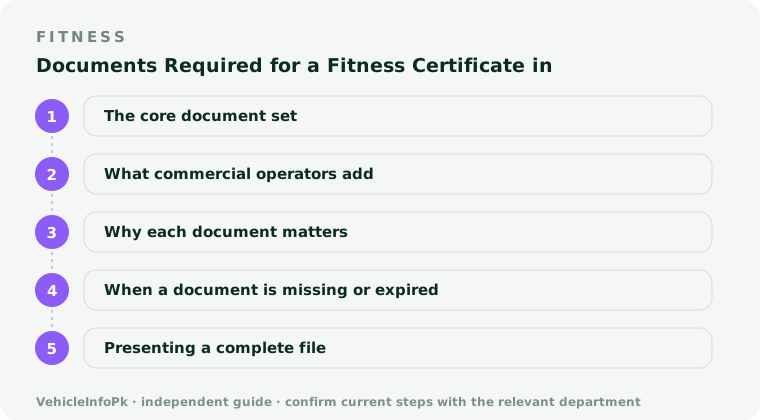
The core document set
Expect to be asked for the following at the inspection authority or the designated station:
| Document | Why it is asked for |
|---|---|
| Registration book or smart card | Establishes the vehicle identity — registration number, chassis and engine numbers, class of use and registered owner. |
| Owner's CNIC | Confirms that the person presenting the vehicle is the registered owner or an authorised representative. |
| Token tax clearance or paid receipt | Shows that annual government dues against the registration are not outstanding. |
| Previous fitness certificate | Lets the authority confirm the last inspection date and whether this is a routine renewal or a lapsed case. |
| Paid fee slip or PSID receipt | Evidence that the inspection and certificate charges have been settled before the vehicle is examined. |
| Insurance, where required | Required in some provinces or for some classes before certification is recorded. |
Carry originals rather than photographs wherever the authority asks for them, and keep a photocopy set in the vehicle so the originals are not handed over and lost.
What commercial operators add
A vehicle used for hire or reward carries a second layer of documentation, because the authority is certifying not just the vehicle but its permission to work:
- Route permit. Shows the vehicle is authorised for its route or area of operation and that permit dues are current.
- Fitness history for the fleet. Operators running several vehicles are often asked for the previous certificate for each one.
- Driver or operator record. Some categories require the person presenting the vehicle to be recorded against the operator.
- Additional class-specific papers. Passenger service vehicles, tankers and dangerous-goods carriers can attract further requirements.
Where a commercial vehicle is presented by a driver rather than the owner, an authority letter from the owner is a sensible addition — it prevents the vehicle being turned away on a technicality.
Why each document matters
The registration book or smart card is the anchor of the whole file: every other document is matched against it. A CNIC mismatch — a certificate applied for by a buyer who has not yet completed the transfer — is one of the commonest reasons an application stalls. Token tax clearance matters because the authority will generally not certify a vehicle whose public dues are in arrears. The previous certificate matters because it tells the inspector whether the vehicle has been continuously certified or is being brought back after a lapse, which changes how thoroughly it is examined.
Do not present a vehicle for inspection while an ownership transfer is still in progress. Until the transfer is recorded, the vehicle record carries the previous owner, and the authority will be matching your CNIC against that record.
When a document is missing or expired
- Registration book lost. Apply for a duplicate registration book or replacement smart card first; certification is not normally progressed without it.
- Token tax unpaid. Generate a PSID against the registration number and clear the outstanding periods, then present the paid receipt.
- Previous certificate lost. Ask the authority to confirm the last inspection from the vehicle record; bring any old receipt or copy you still have.
- CNIC expired. Renew it before the appointment, since an expired CNIC is treated as no identification at all.
- Route permit lapsed. Regularise the permit with the transport authority before seeking fitness, as the two are usually checked together.
- Owner cannot attend. Ask the authority what form of authorisation it accepts, and have it prepared in the owner's name.
Presenting a complete file
Check the whole set the day before the appointment rather than at the counter. Confirm that the name on the CNIC matches the registration record, that the fee receipt is against the correct registration number, and that the vehicle itself is clean enough for a proper examination — an inspector who cannot read a chassis number will stop there. Arrange the papers in the order they are likely to be asked for, and keep the paid receipts separate from the vehicle file so they are not mixed up with older ones.
Assemble the set against your own registration record, and resolve any expired or missing item before you book the inspection rather than at the station. If one document cannot be produced in time, ask the authority what substitute evidence it will accept instead of arriving short.
Keep reading

How to Apply for a Vehicle Fitness Certificate in Pakistan: Documents, Fee, Inspection and Collection
Apply for a Pakistan vehicle fitness certificate with confidence: documents, fee payment, inspection booking, test day and refusal reasons explained.

Vehicle Fitness Certificate in Pakistan: What It Is, Who Needs One and How It Differs From Registration and Token Tax
A vehicle fitness certificate proves roadworthiness. Learn who needs one in Pakistan, how long it stays valid, and how it differs from token tax.

Fitness Certificate Validity in Pakistan: How Long It Lasts and When It Starts
Fitness certificate validity is set by the authority and differs by class and province. Learn when it starts, when it ends, and the expiry gap.