
Fitness
Vehicle Fitness Certificate in Pakistan: What It Is, Who Needs One and How It Differs From Registration and Token Tax

Key takeaways
- A fitness certificate confirms roadworthiness, not ownership or tax payment.
- Commercial and public transport vehicles face the strictest inspection standards.
- Validity periods vary by province, vehicle class and vehicle age.
- Registration, token tax, fitness and route permit are four separate obligations.
A vehicle fitness certificate is a roadworthiness document issued after an inspection, confirming that a vehicle is mechanically safe to be used on public roads. It is separate from registration, which records who owns the vehicle, and separate from token tax, which is the annual road-use charge. Knowing which document applies to your situation helps you plan the right visit to the provincial excise and taxation department instead of making several trips for the wrong thing.
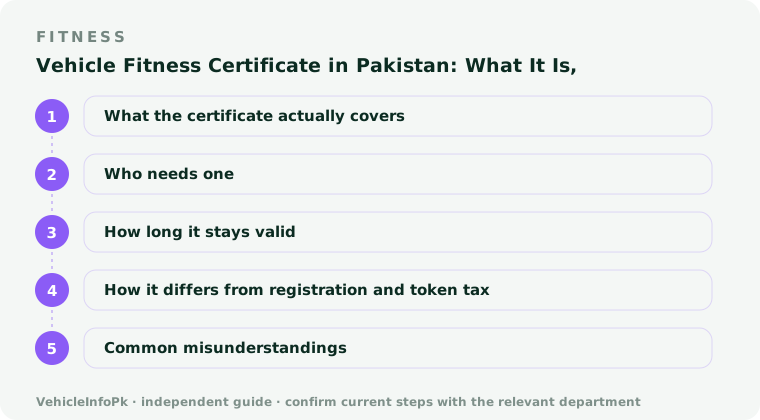
What the certificate actually covers
A fitness certificate is a statement about the condition of the vehicle on the day it was inspected. The inspection looks at the systems that affect whether the vehicle can be driven safely: brakes, steering, lights, tyres, glass, mirrors, the exhaust and emissions, and the general condition of the body and chassis. The inspector is not judging how new the vehicle looks or how well it has been maintained cosmetically. They are checking whether it can stop, steer, signal and carry people or goods without putting other road users at risk.
Commercial and public service vehicles are inspected more strictly than private cars, because they carry passengers or freight for payment and spend far more hours on the road. Expect a closer look at brakes, tyres, body condition and passenger safety fittings if your vehicle falls into that group.
Who needs one
Requirements differ between Punjab, Sindh, Khyber Pakhtunkhwa, Balochistan and the Islamabad Capital Territory, and the rules also change over time, so treat the following as the general shape of the system rather than a fixed rule.
- Commercial vehicles. Buses, vans, coaches, taxis, ride-hailing vehicles, trucks, trailers and goods carriers are expected to hold a current fitness certificate as a condition of operating legally.
- Public transport and school transport. Vehicles carrying passengers for fare are usually held to the highest inspection standard.
- Older private vehicles. Some provinces require a fitness certificate for private vehicles once they pass a certain age, or when ownership is transferred.
- Vehicles being registered, re-registered or converted. A change of use, such as moving a vehicle from private to commercial use, generally requires a fresh inspection.
If your vehicle is used to carry paying passengers or goods, assume a current fitness certificate is required. Confirm the exact age threshold and renewal cycle for your vehicle class with your provincial excise and taxation department.
How long it stays valid
Fitness certificates are issued for a fixed period rather than for life. Private vehicles that need one are usually given a longer validity period than commercial vehicles, and commercial validity is often tied to the age of the vehicle — newer vehicles may be certified for a year at a time, while older vehicles in demanding service are inspected more often. Because the certificate describes condition on the inspection date, a vehicle that is involved in a serious collision or has major structural repair work may need to be inspected again regardless of the expiry date printed on it.
How it differs from registration and token tax
These three documents are frequently confused, and the confusion costs people time. Each one answers a different question.
| Document | Question it answers | What it depends on |
|---|---|---|
| Fitness certificate | Is this vehicle safe to drive on the road? | The physical condition of the vehicle at inspection |
| Registration book or smart card | Who owns this vehicle and is it recorded? | Ownership and vehicle identity, not condition |
| Token tax receipt | Has the annual road-use charge been paid? | Payment for the current tax period |
| Route permit | Is this vehicle allowed to operate on a given route? | Commercial operating authority, separate from fitness |
Paying token tax does not make an unroadworthy vehicle fit, and holding a registration book does not either. All three are separate obligations that run in parallel.
Common misunderstandings
- Assuming a new vehicle never needs inspection. Commercial vehicles generally need one from the start of service.
- Treating the certificate as a one-time formality. It expires, and expiry affects insurance claims and permit renewals.
- Assuming one province's rules apply everywhere. A vehicle that moves between provinces may face a different inspection schedule after transfer.
- Ignoring the documents side. Many inspection failures are paperwork failures rather than mechanical ones.
Before you book anything, check the expiry date on your existing certificate and confirm the current schedule of charges and validity periods for your province. Once that is clear, the next step is the application itself: gathering documents, paying the fee and attending the inspection.
Keep reading

How to Apply for a Vehicle Fitness Certificate in Pakistan: Documents, Fee, Inspection and Collection
Apply for a Pakistan vehicle fitness certificate with confidence: documents, fee payment, inspection booking, test day and refusal reasons explained.

Fitness Certificate Validity in Pakistan: How Long It Lasts and When It Starts
Fitness certificate validity is set by the authority and differs by class and province. Learn when it starts, when it ends, and the expiry gap.

Documents Required for a Fitness Certificate in Pakistan
The fitness certificate document set covers registration book, CNIC, token tax clearance and route permit, and what to do if one is missing.