
Verification
Five Vehicle Verification Mistakes That Cost Buyers Money
Key takeaways
- A printout shows the past; open the provincial portal and read the live record
- Always match the chassis and engine stamps, not just the number plate
- Check token tax, transfer status and challans alongside ownership
- Run one check before the booking amount and a second before the balance
The five mistakes that cost Pakistani buyers money are all variations on one error: accepting something other than the live record. A printed statement, a seller's screenshot, a matching number plate or a quick check made after payment can each look like verification while leaving the actual record unexamined. Running the check properly takes a few minutes and depends mostly on doing it in the right order.
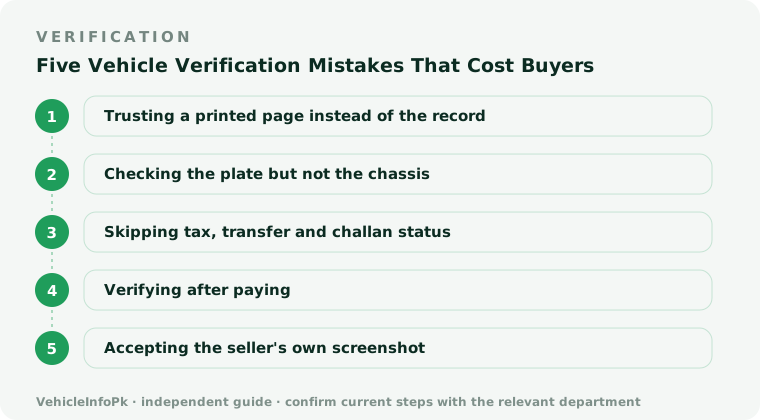
Trusting a printed page instead of the record
A printed page is a snapshot taken at some moment in the past, and it has no way of telling you when that moment was. Paper from the registration authority is useful evidence, but it is not the current state of anything — a transfer, a new challan or a tax payment since the date of printing will not be on it.
- Ask when it was printed, then check whether anything could have changed since.
- Treat a printout as a record of what once was true, not of what is true now.
- Open the provincial portal yourself and read the live entry in front of the seller.
The habit worth building is checking the source rather than the summary. It takes the same time and removes the question of who produced the document.
Checking the plate but not the chassis
A registration number identifies a record; it does not identify the vehicle standing in front of you. Numbers are visible from the road, which makes them the easiest element to move between vehicles, and nothing about a correct lookup tells you that the plate belongs to the car.
| Check | What it proves | What it misses |
|---|---|---|
| Plate lookup only | That some record exists for that number | Whether this vehicle is that record |
| Chassis number match | The frame corresponds to the record | Tax status, ownership, dues |
| Both together | The vehicle and the record line up | Condition, finance, accident history |
Compare the chassis stamp yourself, character by character, and then the engine number as a second anchor. Where the plate series or format looks unusual for the claimed registration city, treat that as a reason to check more carefully rather than as a curiosity.
Skipping tax, transfer and challan status
Ownership is only one field on the record. Buyers who verify the owner name and stop there take on obligations they never asked about.
- Token tax. Unpaid years sit against the vehicle and generally travel with it into your ownership.
- Transfer status. A transfer already in progress tells you something important about who else has been dealing in the vehicle.
- Challans. Outstanding traffic fines follow the vehicle, and some provinces show them alongside the record.
- Fitness certificate. Relevant mainly for commercial vehicles and older ones, where expiry carries enforcement consequences.
Make sure the check covers the vehicle's whole story, not just the owner line. Each of these items is visible in the same record — skipping them costs no time saved, only information lost.
Verifying after paying
Verification only changes your behaviour if it happens while walking away is still possible. Once the balance has been transferred, discovering that the seller was not the recorded owner leaves you chasing someone who already has your money.
Timing also matters in the other direction. A check run at the first viewing can go stale during a long negotiation, during which new challans are issued or a second buyer is found. The practical standard is two checks: one before a booking amount, one immediately before the balance — with the chassis comparison done on the day money moves.
Accepting the seller's own screenshot
A screenshot handed over mid-negotiation is the weakest form of evidence available. It shows a result someone else obtained, at an unknown time, from an unknown source, possibly cropped or from a website designed to imitate a provincial portal.
- Ask the seller to open the provincial portal and run the check while you stand beside them.
- Compare the registration number they enter with the plate on the vehicle with your own eyes.
- Note the date and any verification reference the portal displays, so you have something traceable.
- Where the seller insists you take their image instead, treat the refusal itself as the answer.
A genuine seller has no interest in being the only person able to produce the record, and most will be glad to have you look at it directly.
Do your own lookup on your own device, match the chassis before any payment, and read the tax and challan fields at the same time — those three habits prevent almost every problem described above.
Keep reading
How to Verify Vehicle Ownership Online in Pakistan
Verify vehicle ownership online by registration number: see what the provincial lookup returns, which fields to match, and what the result means.
How to Verify a Used Car Before Buying in Pakistan
Before you pay for a used car: documents, engine and chassis number matching, verification lookup, token tax status, seller CNIC and sale letter.
Which Documents and Numbers You Need Before a Vehicle Verification
Vehicle verification needs your registration number, owner CNIC and chassis number. See why each is required and what to do if one is missing.