
Verification
How to Verify a Used Car Before Buying in Pakistan
Key takeaways
- Ask for the original registration book and the seller's CNIC before anything else
- Match engine and chassis numbers against the stampings and the book, digit for digit
- Check token tax and challan status, and let arrears adjust the price you agree
- The person signing the sale letter must be the recorded owner or hold a transfer chain
Before you pay for a used car in Pakistan, run a verification lookup on the registration number, match the engine and chassis numbers against the documents, confirm the token tax position, and check that the seller's CNIC matches the recorded owner. Those four checks take less than an hour and catch the problems that are expensive to discover later. Everything else, including the mechanical inspection, comes after them.
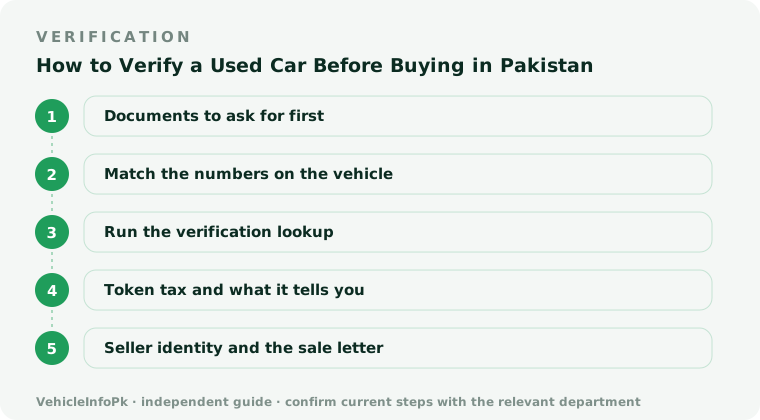
Documents to ask for first
Ask for the paperwork before you look at the car in detail. A seller who cannot produce these on request is telling you something useful.
- Registration book or smart card. The original, not a photocopy, and not a picture on a phone.
- The seller's CNIC. Compare the name and number with the registration book.
- Token tax payment records. Any receipts or payment confirmations for recent years.
- Fitness certificate. Required for commercial and public transport vehicles, and worth seeing for any older vehicle.
- Service and repair history. Not a legal document, but it helps you judge mileage claims and how the car was kept.
If the car is being sold by someone who is not the recorded owner, ask to see the chain of transfer documents that leads from the recorded owner to them. A gap in that chain is a reason to walk away, not a formality to sort out later.
Match the numbers on the vehicle
Numbers are the hardest detail to alter convincingly, so do this check in daylight with the bonnet open. Find the engine number stamped on the engine block and the chassis number stamped on the frame or firewall, then compare both against the registration book character by character.
A single mismatched digit means the documents belong to a different vehicle, or the engine has been replaced without the record being updated. Either way the discrepancy has to be resolved at the provincial excise and taxation department before you proceed.
Check the engine bay for tampered or re-stamped surfaces, and compare the vehicle's colour with the colour recorded in the registration book. A repaint is normal; a repaint nobody mentions is worth a question.
Run the verification lookup
Enter the registration number on the provincial vehicle verification portal and read the result alongside the registration book. Then run the same number against the traffic police challan portal to see whether any unpaid challans are attached to the vehicle.
| Check | Where | What passes |
|---|---|---|
| Owner name | Provincial verification portal | Matches the name on the seller's CNIC, or a documented transfer chain explains the difference |
| Engine and chassis numbers | Plate, book and physical stampings | All three agree exactly, digit for digit |
| Token tax | Provincial portal or tax receipt | Paid up to date, or arrears agreed and deducted from the price |
| Challans | Traffic police challan portal | No unpaid challans, or the seller clears them before the sale |
| Fitness certificate | Book or certificate | Current, for commercial and public transport vehicles |
| Sale letter | Seller | Signed, dated, with CNIC copies and the agreed price |
Token tax and what it tells you
Token tax is charged once a year and is generally worked out from engine capacity, with the rate schedule set by each province and revised from time to time. Because the schedule and any additional charges differ between Punjab, Sindh, Khyber Pakhtunkhwa, Balochistan and the Islamabad Capital Territory, check the current schedule published by your provincial department before you pay, rather than relying on a figure quoted by the seller or seen in an advertisement.
For a buyer, a run of unpaid years is a real cost. Ask the seller to clear arrears before completion, or agree a price reduction that reflects them, and get whichever you agree in writing.
Seller identity and the sale letter
The person signing must be the recorded owner, or must hold a properly documented chain of authority to sell. Photograph their CNIC, and make sure the name on it matches the registration book and the verification record. A sale letter should record the date, the price, the vehicle details including engine and chassis numbers, and the CNIC numbers of both parties, signed by two witnesses.
Complete the transfer of ownership promptly after payment. Until the transfer is registered, the vehicle stays in the seller's name for some purposes and in yours for others, which is the situation that causes problems with later challans and tax notices.
Work through the six checks in the table before any money moves, and keep copies of everything you are given. Once the documents, the numbers and the lookup all agree, the next step is a signed sale letter followed by the transfer of ownership at the registration authority.
Keep reading
How to Verify Vehicle Ownership Online in Pakistan
Verify vehicle ownership online by registration number: see what the provincial lookup returns, which fields to match, and what the result means.
Which Documents and Numbers You Need Before a Vehicle Verification
Vehicle verification needs your registration number, owner CNIC and chassis number. See why each is required and what to do if one is missing.
Vehicle Verification for First-Time Buyers: When to Check and What
Verifying a used car in Pakistan: check before the booking amount, then again before the balance. A sequence for first-time buyers.