
Fitness
Fitness Certificate for Private Cars in Pakistan: When It Is Required

Key takeaways
- A privately used car is usually certified on events, not a routine annual cycle.
- Age, change of province, commercial conversion and accidents trigger inspection.
- The class of use printed on the registration record decides which track applies.
- Commercial files add a route permit and face a tighter inspection standard.
A private car in Pakistan is not routinely held to the same fitness certification cycle as a commercial vehicle; whether you need a fitness certificate depends on your province's rules, the age of the car, and what you are using it for. The practical position is that a privately used car is usually certified only in defined situations, while a car put to commercial use moves onto the stricter commercial track. This guide sets out when a private car is called in, how the private route differs from the commercial one, and what to check before you travel to an inspection station.
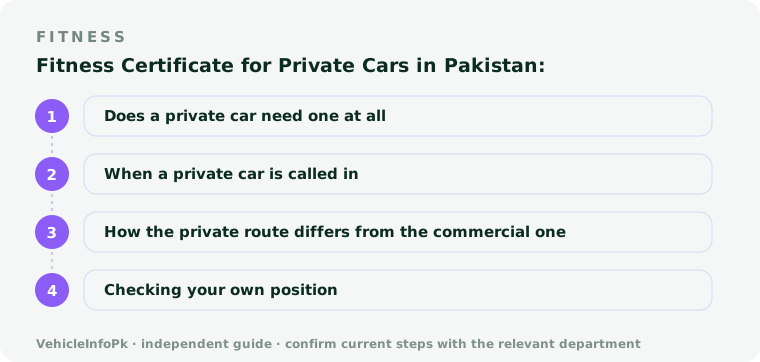
Does a private car need one at all
In most provinces a car registered for private use and driven by its owner is not pulled into a routine annual fitness cycle in the way a bus or goods carrier is. Private vehicles are still subject to registration, token tax and road rules, but certification is triggered by events rather than by a standing calendar. That distinction is set provincially, so the position in Punjab, Sindh, Khyber Pakhtunkhwa, Balochistan and the Islamabad Capital Territory is not necessarily identical — confirm the rule that applies where the vehicle is registered.
Two cautions follow from this. First, "not routinely required" is not the same as "never required"; the triggers below apply to private cars all the time. Second, an older car attracts more attention than a new one, and age thresholds are a matter of provincial rule rather than a single national number.
When a private car is called in
| Situation | Why fitness is asked for |
|---|---|
| Age of the vehicle | Older cars may be required to be examined before their registration or certification is continued. |
| Change of province | A vehicle moved between provinces is re-registered there, and fitness is commonly checked as part of that process. |
| Conversion to commercial use | Moving a car onto a taxi, ride-hailing or goods category puts it on the commercial standard from that point. |
| Post-accident inspection | After a serious collision the authority may require examination before the vehicle returns to the road. |
| Structural or engine change | A change recorded against the registration can trigger a fresh examination. |
| Direction from the traffic police | A vehicle found visibly defective can be directed to present for inspection. |
A car used for ride-hailing is not a private car in the eyes of the registration authority. If your use has changed, regularise the class of use and the route permit requirement before you certify, because the inspection standard applied will be the commercial one.
How the private route differs from the commercial one
- Documents. A private file is normally registration book or smart card, CNIC, token tax clearance and fee receipt. A commercial file adds a route permit and operator records.
- Inspection standard. Commercial vehicles are examined on a tighter cycle and to a higher bar because they carry passengers or goods for hire and accumulate far more wear.
- Validity. The period set for a commercial class is usually shorter, bringing the vehicle back more often.
- Linked permissions. A commercial vehicle's ability to work is tied to its permit as well as its certificate; a private car has no permit to lose.
- Enforcement exposure. Commercial operators face stricter roadside checking, so the cost of a lapse is higher for them.
Checking your own position
- Read the class of use printed on your registration book or smart card; that line, not your own description of how you use the car, decides the track.
- Check the vehicle record on the provincial portal for any fitness requirement or outstanding dues against your registration.
- If the car is being moved to another province, ask the receiving excise and taxation department what it requires before you start the transfer.
- If the car has been in a collision, ask the authority whether an inspection is needed before it is driven again.
- Keep the certificate and paid receipts with the vehicle documents, since fitness is often checked during a transfer or a roadside stop.
Establish your car's class of use and your province's rule before assuming that fitness does not apply to you, and treat a change of use or a move between provinces as the point at which the question is reopened. Where a certificate is required, having the registration record, token tax clearance and fee receipt ready is usually what makes the visit a single trip.
Keep reading

How to Apply for a Vehicle Fitness Certificate in Pakistan: Documents, Fee, Inspection and Collection
Apply for a Pakistan vehicle fitness certificate with confidence: documents, fee payment, inspection booking, test day and refusal reasons explained.
Vehicle Fitness Certificate in Pakistan: What It Is, Who Needs One and How It Differs From Registration and Token Tax
A vehicle fitness certificate proves roadworthiness. Learn who needs one in Pakistan, how long it stays valid, and how it differs from token tax.

Fitness Certificate Validity in Pakistan: How Long It Lasts and When It Starts
Fitness certificate validity is set by the authority and differs by class and province. Learn when it starts, when it ends, and the expiry gap.