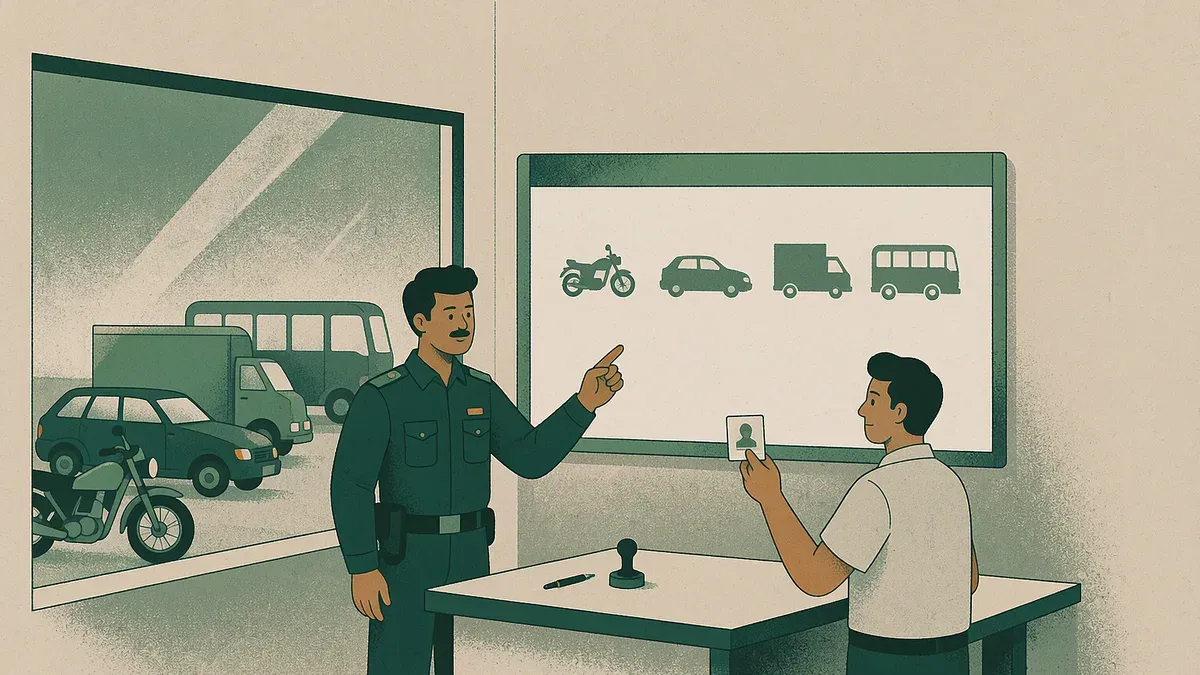
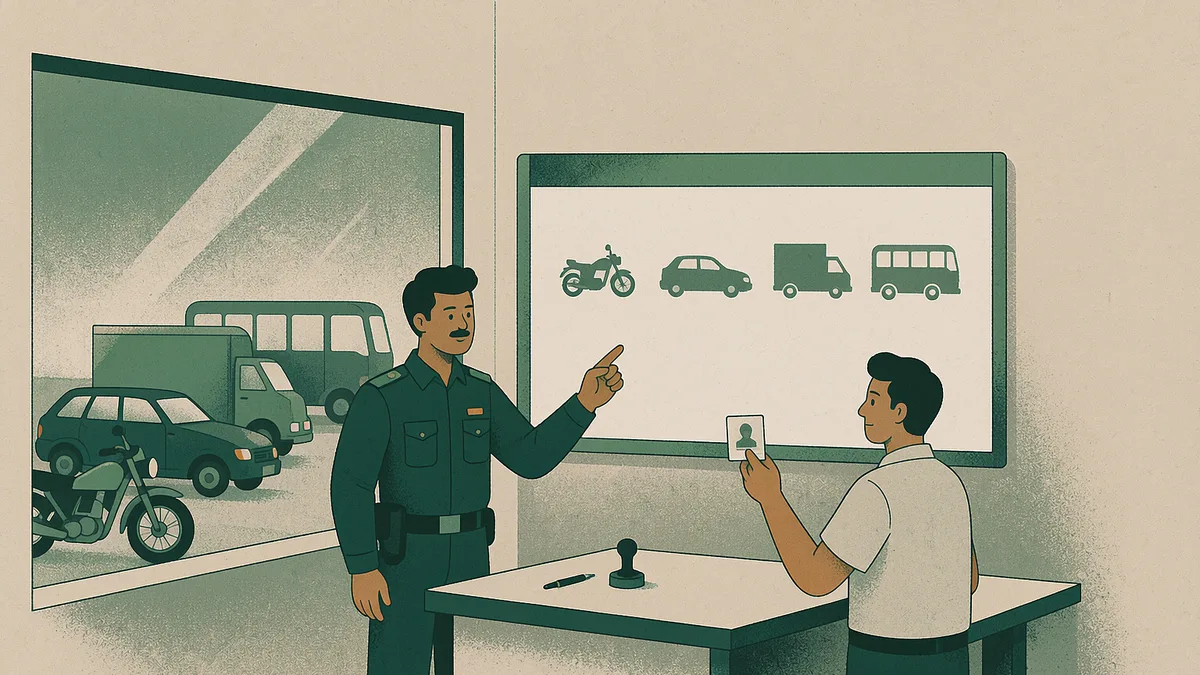
A licence lists the vehicle classes its holder may drive, and in Pakistan those classes are printed separately on the card. For anyone driving for a living the class matters more than the card itself: a motor car licence does not cover paid passenger work, and a heavy vehicle endorsement is worthless if the vehicle’s registration and use point to a different class. This guide sets out what each class covers, the age and experience gates, how to add a class, and what the published fees in Punjab actually buy.
The classes and what each one covers
| Class on the licence | Vehicles it covers | Typical work |
|---|---|---|
| Motorcycle | Motorcycles and scooters | Delivery, personal travel |
| Motorcycle rickshaw | Three-wheeled motorcycle rickshaws | Local passengers, light goods |
| Motor car or jeep | Private cars and jeeps, not for hire | Private driving |
| Light transport vehicle (LTV) | Light goods vehicles, taxis, jeeps and mini buses used commercially | Taxi, van, small truck |
| Heavy transport vehicle (HTV) | Trucks, buses, trailers and other heavy vehicles | Freight, intercity bus |
| Tractor, agricultural | Tractors used for agriculture | Farm work |
| Tractor, commercial | Tractors used for hire or haulage | Haulage |
| Public service vehicle (PSV) | Vehicles carrying passengers for hire | Bus, coach, large van |
| Invalid carriage | Adapted vehicles for drivers with a disability | Personal travel |
The names follow the fee schedule published by Punjab’s traffic police, and the same set appears in the other provinces with local variations. A van registered for goods and used to carry paying passengers is the wrong combination whatever the licence says.
Age and experience gates
| Class | Minimum age in Punjab | Prior licence required |
|---|---|---|
| Motorcycle, motor car | 18 | None |
| LTV, motorcycle rickshaw, tractor commercial | 21 | None stated beyond the learner permit |
| HTV | 22 | A motor car or LTV licence held for three years |
Other provinces set their own thresholds, and the age is checked against the CNIC, so an application filed a month early is refused at the counter. For HTV, the three years run from the issue date of the earlier licence.
What the endorsement authorises
An endorsement is a category added to the card, with its own date. A driver who adds LTV in March and applies for a truck job in April holds a licence that shows both dates, and an employer reading only the first line will misjudge what is covered.
Read the categories as a combination, because passenger work needs both the vehicle class and the PSV entry. PSV with LTV covers passenger vans and mini buses, while PSV with HTV covers larger buses and coaches. A PSV entry with no matching vehicle class does not authorise driving the vehicle.
The same logic applies to tractors. An agricultural tractor licence covers farm use, and haulage for hire needs the commercial tractor category.
Adding a class to your licence
- Apply for a learner permit in the new category. In Punjab this is a separate permit for each category, at Rs 500, applied through DLIMS or at a licence centre.
- Hold the learner permit for the minimum period set by the licensing authority. Forty-two days is the common figure, and the office confirms the date on your slip.
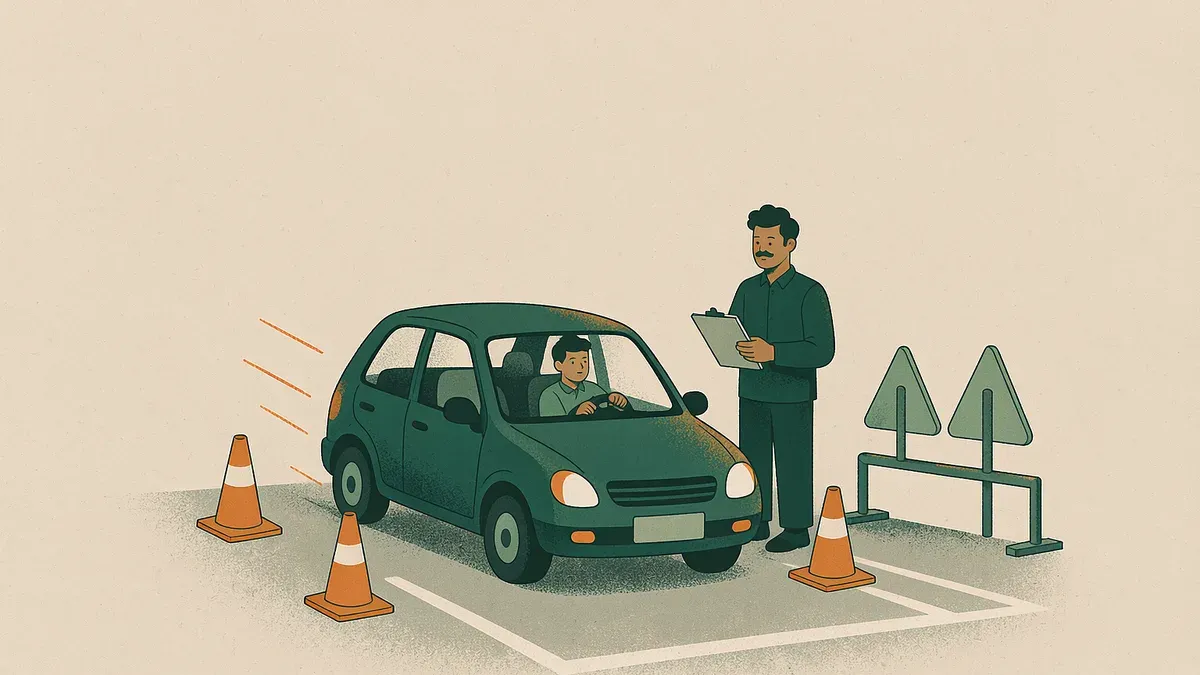
- Book the tests for that class: sign test, vision or medical examination, then the practical driving test. A medical certificate on Form B is required for commercial categories and for applicants above 50.
- Pay the licence fee for the years you want, plus the testing fee for the category.
- Collect the card, or download the e-licence, and check that the new category and its date are printed before you leave.
What the fees cover in Punjab
| Item | Amount | Note |
|---|---|---|
| Learner permit | Rs 500 per category | Paid before the tests |
| Practical test fee | Rs 50 motorcycle, Rs 100 motorcycle rickshaw, Rs 150 motor car and LTV, Rs 200 HTV and PSV | Charged per attempt |
| Licence fee per year | Rs 500 motorcycle or rickshaw, Rs 1,500 motor car, Rs 2,000 LTV or HTV, Rs 1,000 tractor agricultural, Rs 1,500 tractor commercial or PSV | Validity of one to five years |
| Card printing and delivery | Rs 480 | Added to each issue |
| Late renewal fine | Rs 1,250 motorcycle, Rs 3,325 motor car, Rs 4,625 LTV or HTV, per year late | Charged with the renewal fee |
These are the figures published by the traffic police in Rawalpindi for Punjab. Other provinces differ widely, and Islamabad’s published schedule sets a flat amount per issue instead of a yearly rate, so compare the total for the validity you need.
Validity and renewal
Punjab issues licences for one to five years, and renewal can be taken for the same range. A licence expired for more than five years requires a visit to the licensing authority and a fresh driving test before renewal. A commercial licence also needs the Form B medical certificate at renewal, which is where online renewals fail.
Diary the expiry against the vehicle’s fitness and permit dates. A driver whose licence lapses during a contract leaves the operator exposed at a roadside check, and the late fine grows with each year it stays expired.
Where the provinces differ
| Jurisdiction | Issuing authority | Online route | What to watch |
|---|---|---|---|
| Punjab | Traffic police licensing centres | DLIMS and Dastak | Fee charged per year of validity |
| Sindh | Sindh Police driving licence department | dls.gos.pk | Its own fee schedule and validity options |
| Khyber Pakhtunkhwa | KP traffic police | ptpkp.gov.pk | Its own procedure and verification route |
| Islamabad | Islamabad Traffic Police | dlims.islamabadpolice.gov.pk | Flat fee per issue, not per year |
| Balochistan | District licensing offices | None confirmed | Confirm age, fee and documents at the counter |
A licence stays valid for the classes printed on it, but a new application, an endorsement or a renewal is handled by the authority that holds the record. A driver moving provinces for work should confirm whether the card needs conversion.
What employers should check
- The class matches the vehicle and the work, including goods against passengers.
- The endorsement date for a recently added class, alongside the class name.
- The expiry date, checked at hiring and again at each contract renewal.
- The record on the official verification portal for the issuing province.
- The medical certificate for commercial categories, and the photograph against the holder.
Fleet operators often check the card at hiring and never again, and a renewal that passes during employment leaves the driver unlicensed.
When the class does not match
Driving a vehicle outside the licensed class is treated as not holding the licence required for that vehicle. That brings a challan, and it can affect an insurance claim where the driver was not licensed for the vehicle involved. For a passenger operation running on goods-category licences, the mismatch also surfaces at fitness and permit checks.
Before you apply or hire
- Identify the vehicle class from the registration book, then match the licence to it.
- For HTV, confirm the earlier licence has three years on it before paying for a learner permit.
- Keep the learner permit slip, the test receipt and the card delivery slip together.
- Check the printed categories and dates on the card on the day it arrives.
- Put the expiry date in a calendar with a reminder two months ahead.
Match the class to the work the vehicle does. The card prints each category with its own date, and that line is what a traffic officer, an insurer and an employer will read.