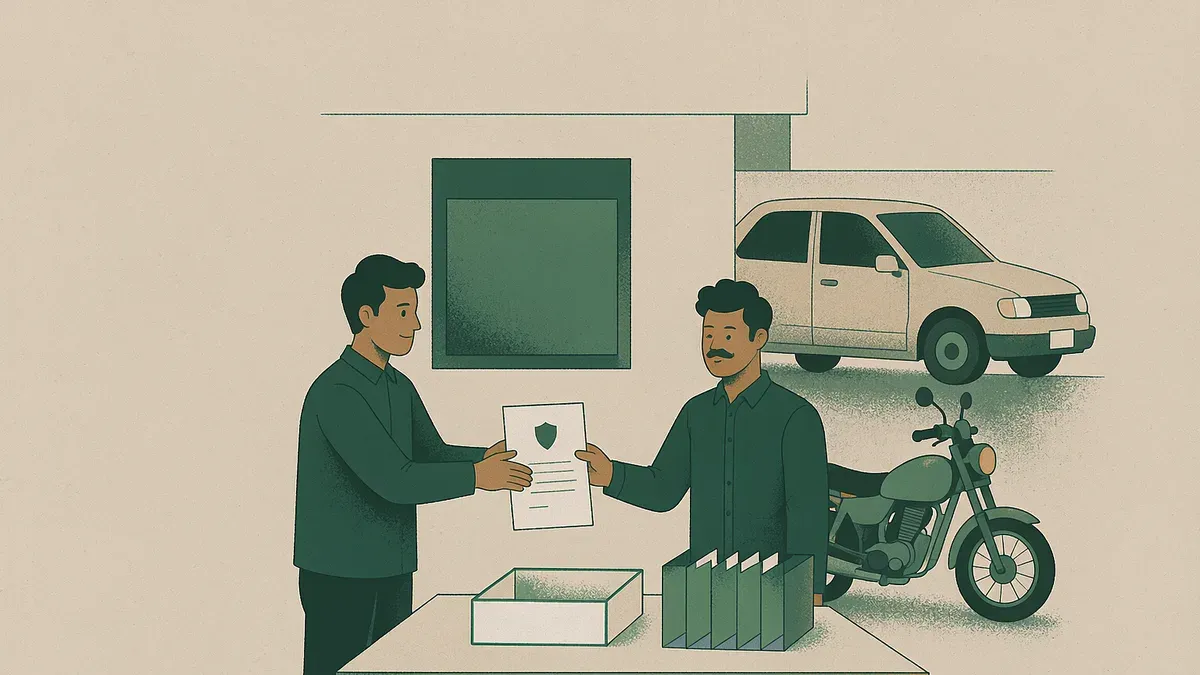
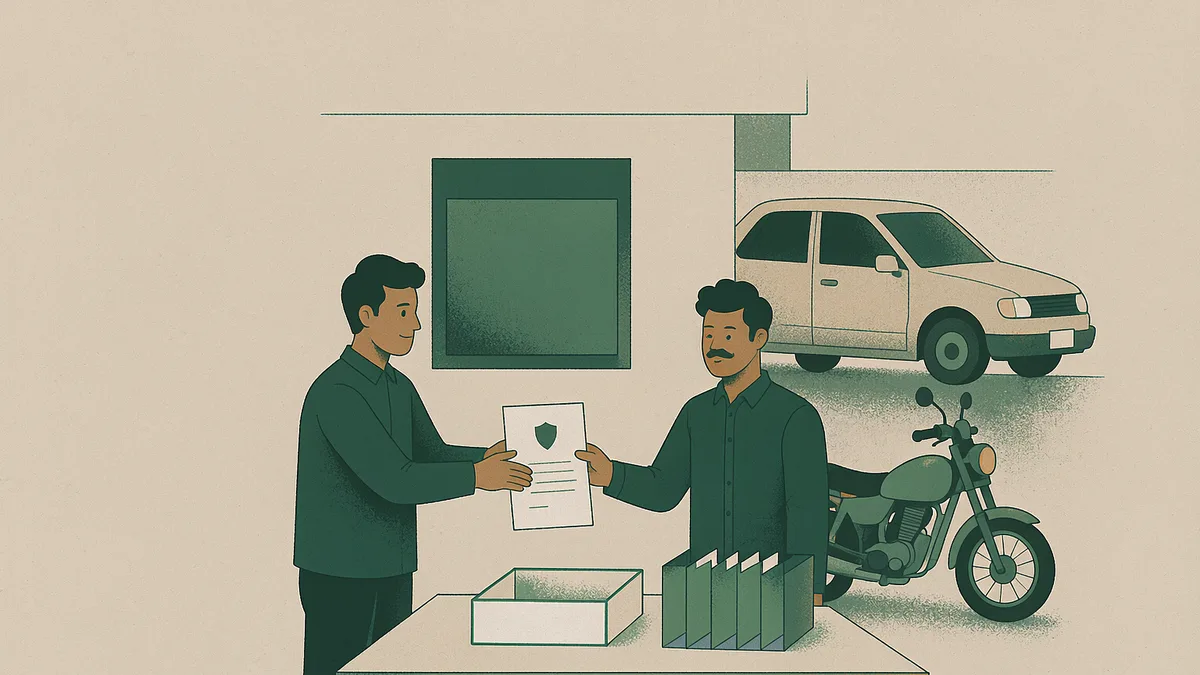
A car, van or truck used on a public road in Pakistan is expected to carry insurance that answers for injury or damage caused to other people. The rule is old. Enforcement is what has changed: Sindh now refuses registration, ownership transfer, alteration and annual token tax for a vehicle without a valid third-party policy, with motorcycles excluded. This guide sets out which vehicles the requirement covers, what a policy pays after a collision, and how to buy cover that a counter clerk or a traffic officer will accept.
The cover the law expects
Third-party liability has been part of Pakistan’s motor vehicle law for decades. The provisions were carried from the Motor Vehicles Act 1939 into the provincial motor vehicles ordinances, and they place the duty on the person using the vehicle in a public place: a policy covering that use must be in force. Provinces administer registration, so the point at which cover is checked and the paperwork accepted differs.
Sindh made the link explicit. Section 67-H of the Provincial Motor Vehicles (Amendment) Act 2026 bars the registration authority from registering a vehicle, recording a transfer, allowing an alteration, or accepting annual tax unless a valid third-party policy is in place. Two-wheelers and motorcycles sit outside that condition. The same Act sets a no-fault compensation scale and a 45-day payment window.
Other provinces apply the same underlying obligation through their own ordinances and rules, with their own enforcement practice. Treat a current policy as a condition of using the vehicle everywhere, and confirm the counter requirements in your province before a registration or transfer appointment.
What a third-party policy pays
A third-party policy responds to claims from people outside your vehicle. If you injure a pedestrian, damage another car, hit a wall or knock over a shop sign, the insurer handles the liability up to the limits in the schedule and the law. It does not repair your own vehicle, replace your own parts, or pay your own medical bills.
| Claim | Third-party only | Comprehensive |
|---|---|---|
| Injury or death of another person | Covered up to the policy limit | Covered |
| Damage to another vehicle or property | Covered | Covered |
| Repairs to your own vehicle | Not covered | Covered, subject to excess |
| Theft or fire of your vehicle | Not covered | Covered where included |
| Your own injuries | Not covered unless passenger cover is added | Usually a separate personal accident cover |
| Legal costs of defending a claim | Usually included | Usually included |
Comprehensive cover adds damage to the insured vehicle, fire and theft. Lenders normally require it for a financed vehicle until the loan is closed. The third-party policy is the cheaper legal minimum, and it leaves the owner carrying the cost of their own repairs.
Which vehicles need it
The requirement follows use on a public road rather than body type. A private car, a company van, a school bus, a taxi, a rickshaw, a truck and a pickup carrying another trader’s goods all fall inside it. A vehicle parked off the road with no policy is a different question from a vehicle being driven, and cover should be in place before the vehicle moves.
Sindh’s section 67-H leaves motorcycles outside the registration condition, but a rider who injures someone still faces a claim, and a civil court will not treat the absence of a policy as a defence. Motorcycle policies are sold by the same insurers and cost far less than a serious injury settlement.
A new or imported vehicle in Sindh needs cover before it can be registered. The policy can be written on the chassis number while the registration number is pending, then updated once the number is issued. Ask the insurer to reissue the schedule with the registration number instead of leaving the chassis number on the document for the life of the policy.
Buying and proving cover
- Decide the class of use. Private, commercial passenger and goods use carry different rates, and a private policy used for hire can be refused at claim stage.
- Get schedules from insurers registered with SECP. Compare the limits, the deductible, the exclusions and the premium, since the cheapest quote often carries the narrowest cover.
- Give accurate details: registration or chassis number, engine capacity, vehicle value, driver details and any claims in the past three years.
- Choose the sum insured for own damage and the third-party limits. The statutory scale sets a floor for compensation in Sindh. A higher limit costs more and pays more.
- Pay the premium and collect the policy schedule, the certificate of insurance and the receipt. Check that the registration number, owner name and period are correct before you leave.
- Ask whether the policy has been uploaded to SECP’s motor insurance repository. Registration staff can use that record to confirm cover, and a policy that exists only on paper can hold up a transaction.
Premium is not fixed nationally. It moves with engine capacity, vehicle value, class of use and claims history, so two quotes for the same car can differ. Compare what each schedule actually covers.
At a checkpoint or a registration counter, the certificate and the schedule are what establish cover. Keep a copy in the vehicle and a photo on the phone, and note the expiry date. A certificate for a different registration number, or for a period that ended last month, invites a longer conversation than a missing folder.
When a policy fails a check
Most failures come from small mismatches: a policy still written on the chassis number after registration, a registration number typed with one wrong digit, a private policy used for paid passenger trips, a driver excluded by name, or a renewal paid after the old policy expired. Insurers can decline a claim where the vehicle was used outside the declared class, where the driver did not hold a licence, or where the accident was reported outside the policy window.
Sindh’s no-fault route runs separately from an ordinary claim. The injured person or their family can claim the scheduled amount from the insurer without waiting for a court finding, and the insurer must pay within 45 days or the period allowed under the Insurance Ordinance 2000, whichever is earlier. The schedule sets Rs 700,000 for a death and up to Rs 500,000 for the listed permanent injuries, with smaller amounts for individual fingers, toes and hearing loss.
A lapse costs more than the missing premium. Insurers usually require an inspection before restarting cover, and the no-claim discount resets. A long gap also means the vehicle has gone months without anyone checking it.
Renewing without a gap
Start the renewal two to three weeks before expiry. Send the insurer the current schedule, ask for the renewal terms in writing, and pay before the expiry date so the new period starts without a break. Keep the last three schedules and receipts with the registration card, because a buyer, a lender or a claims officer may ask for the history.
If the vehicle is sold, the policy does not automatically move to the buyer. The seller can ask the insurer to cancel from the sale date and refund the unused premium, and the buyer needs cover in their own name from the day they take the vehicle. Leaving the old policy running in the seller’s name creates a gap that shows up at the first claim.
Check the policy before the registration or transfer appointment, not at the counter. The certificate, the schedule and the repository entry should agree on the vehicle, the owner and the period. When they do, insurance stops being the reason a file goes back.