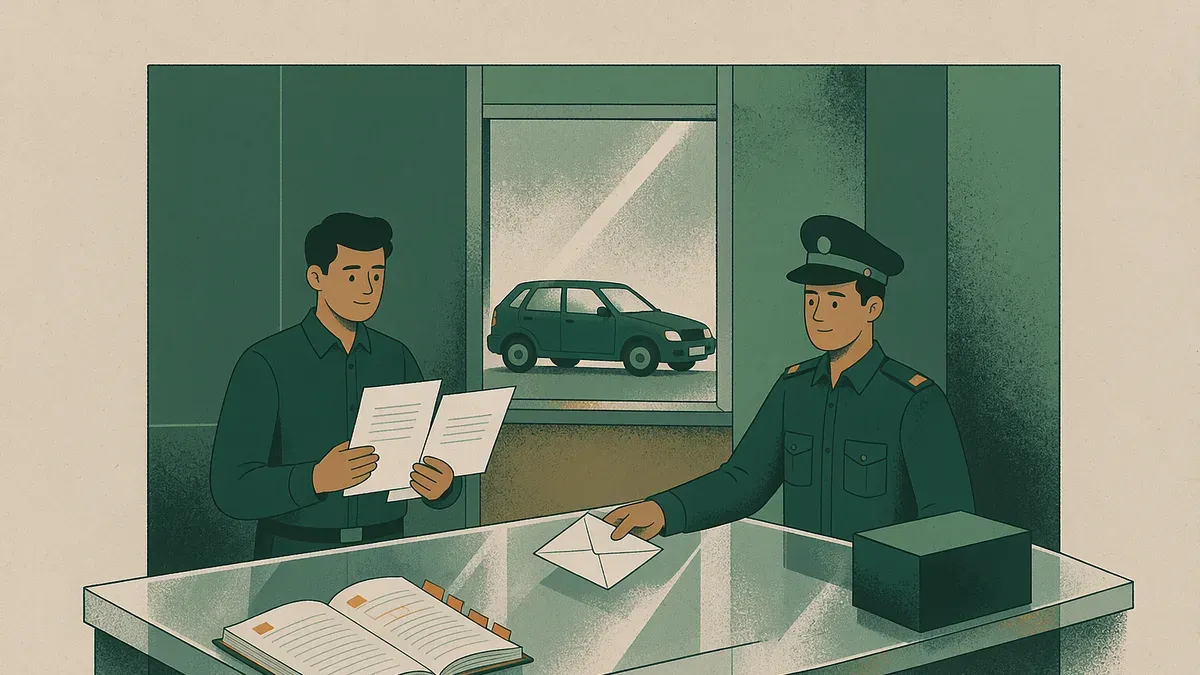
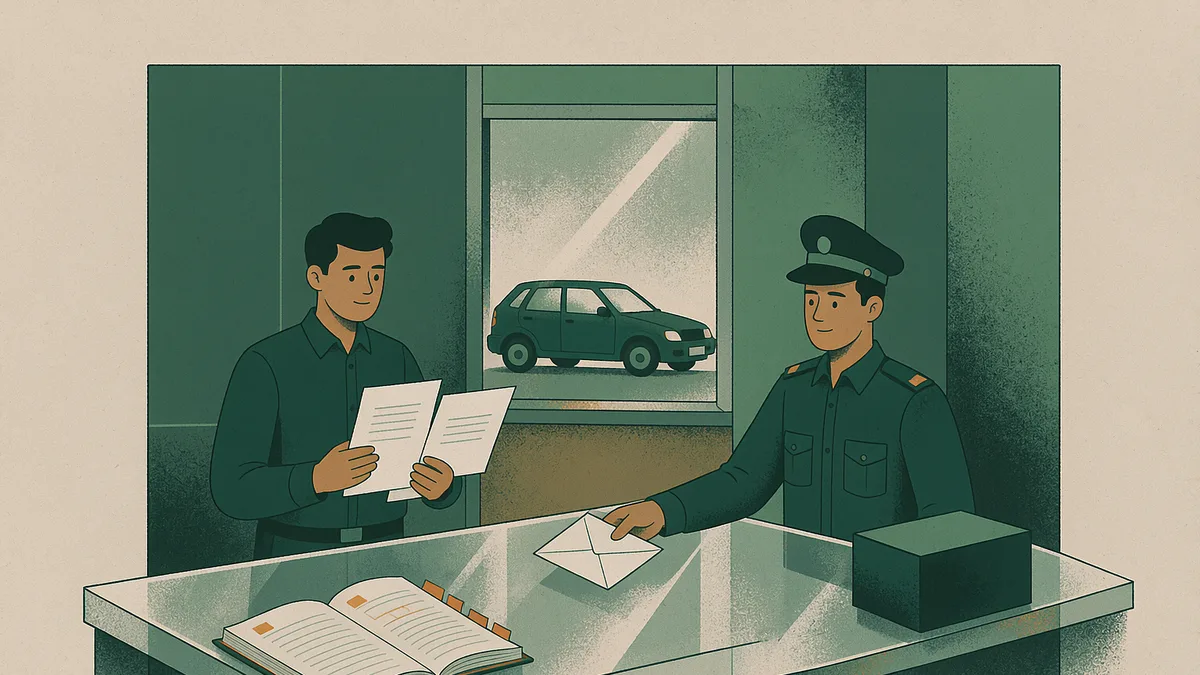
A token tax payment can go wrong in ways that leave money with the department: a slip paid twice, a registration number typed wrong, a sale completed the week after the tax was paid, a vehicle off the road for a season. Recovering the money means knowing that the amount on the challan was two taxes collected together, because the two halves are returned by different offices under different rules.
One payment, two taxes
What owners call token tax combines a provincial motor vehicle tax with federal advance income tax collected on FBR’s behalf. The provincial part is set by the province’s finance act. The federal part is adjustable against your income tax liability and refundable through your return.
| Component | Set by | Collected by | How it comes back |
|---|---|---|---|
| Provincial motor vehicle tax | Provincial finance act and tax schedule | Excise and taxation department | Application to the licensing officer; adjustment against the next period or a refund through the treasury |
| Federal advance income tax | Income Tax Ordinance, under the withholding sections for registration, transfer and annual tax | Excise, on FBR’s behalf | Shown in the income tax return, then adjusted or refunded through Iris |
Which half you are chasing decides where the file goes. An application to the excise office for the federal portion will be sent back, and a refund claim in Iris will not return provincial tax.
How an overpayment happens
- The same PSID paid twice, once at a bank counter and again in a banking app, with the second payment landing after the first cleared.
- A digit typed wrong in the registration number, so the payment sits on another vehicle’s record.
- Tax paid for the year and the vehicle sold and transferred a week later, leaving an overlap on your payment.
- A vehicle off the road for a full period with no non-use declaration filed at the time.
- Registration cancelled, or the vehicle exported, partway through the period.
- A payment made at non-filer rates after the ATL status changed, or the reverse.
Two of these produce a refund. The rest produce an adjustment at best, because the tax was due when it was paid.
The provincial side: adjustment or refund
Provincial motor vehicle taxation laws allow a deduction where a vehicle was not used for a whole assessment period, subject to a declaration to the licensing officer, and leave the refund procedure to rules made under the act. In practice the file looks like this:
- Apply in writing to the licensing officer of the district that holds the record.
- Quote the challan or PSID, the amount, the date and the reason in the first paragraph.
- Attach copies of the evidence and keep the originals.
- Ask for the outcome in writing: an adjustment endorsement against the next period, or a refund order.
- Follow up with the diary number.
Most offices prefer an adjustment because it avoids a treasury payment. Where the vehicle has left your name, an adjustment has nothing to attach to, so ask for the refund. No province publishes a service standard for this, so the diary number and a written follow-up at two weeks are the practical controls.
The federal side: claim it in your return
FBR’s published position is specific. A refund can be claimed only if the return was filed electronically; the refundable amount must appear in the return in Iris; a separate application is filed in Iris; and status is followed at the Regional Tax Office. The claim must be made within two years from the date of filing the return, or the date the tax was paid, whichever is later. A person who files after the due date is not entitled to a refund for the period they are outside the Active Taxpayers List.
The sequence that works is: file the return for the year the tax was deducted, check that the withholding appears in your tax credit summary, then file the refund application. If the deduction does not appear, the collector has not reported it against your CNIC, and the claim stalls until that is corrected.
The evidence pack
| Item | What it proves | Where to get it |
|---|---|---|
| Paid challan, both copies where two payments exist | Amount, date, PSID | Bank counter or ePay receipt |
| Bank statement showing the debits | Money left the account | Banking app or branch |
| Registration book or smart card | The vehicle the payment was meant for | Your file |
| Transfer completion proof or cancellation order | The date your liability ended | Excise office |
| Non-use declaration and acknowledgement | The vehicle was off the road | Licensing officer |
| Return acknowledgement and tax credit summary | The federal claim | Iris |
| Withholding certificate | The deduction is reported against your CNIC | Iris or the collecting office |
Adjustment or refund: choosing the route
If the vehicle is still yours and the next renewal falls within a year, an adjustment is the shorter route. If it has been sold, exported or cancelled, ask for the refund, because there is no future period to credit. The federal portion always goes through the return, whichever route you take for the province. For a small amount and a long trip to the office, the cost of pursuing it can exceed the refund, and an adjustment costs one visit instead of several.
Province by province
In Punjab, token tax is paid online against a PSID. When a slip was paid twice, quote both PSIDs and the two bank entries, and file at the district office that holds the record. In Sindh, tax and registration sit with the excise department’s regional directorates under the Sindh Motor Vehicle Taxation Act, 1958, and the file follows the directorate that holds the vehicle record. Khyber Pakhtunkhwa publishes its own tax and advance tax schedules, and a correction is filed with the office that assessed the tax. In Islamabad, token tax is paid online with a rebate window early in the financial year, and a correction still goes through the excise office. For Balochistan, keep the bank-stamped challan and confirm the signing officer at the district office, since no refund service page for the province could be confirmed.
The current provincial schedules are on the Punjab Dastak excise list, the Sindh motor vehicle tax page and the KP motor vehicle tax page. The federal refund rules quoted above are on FBR’s income tax refund page.
Mistakes that cost the claim
- Paying a second time to clear a stuck payment, which turns one problem into two claims.
- Filing without the bank statement, when the challan alone does not prove the debit.
- Applying at the wrong district, or to the excise office for the federal half.
- Waiting on the provincial file until the two-year federal window closes.
- Filing a manual return, which FBR says does not entitle you to a refund.
- Handing originals to an agent and keeping no copies.
- Accepting a verbal promise that the amount will be adjusted, with no endorsement on the record.
What to do this week
- Download both receipts and save the PSID or challan numbers.
- Print the bank statement lines that show the debits.
- Write one page: vehicle, payment dates, amounts, what went wrong, what you want.
- File at the office that holds the record, and ask for a stamped copy.
- Diary two dates: a two-week follow-up with the office, and the two-year federal deadline.
An overpayment is recoverable when the paper trail is complete and the two halves are chased separately. Start with the receipts you already have, and put the request in writing before the next renewal cycle begins.