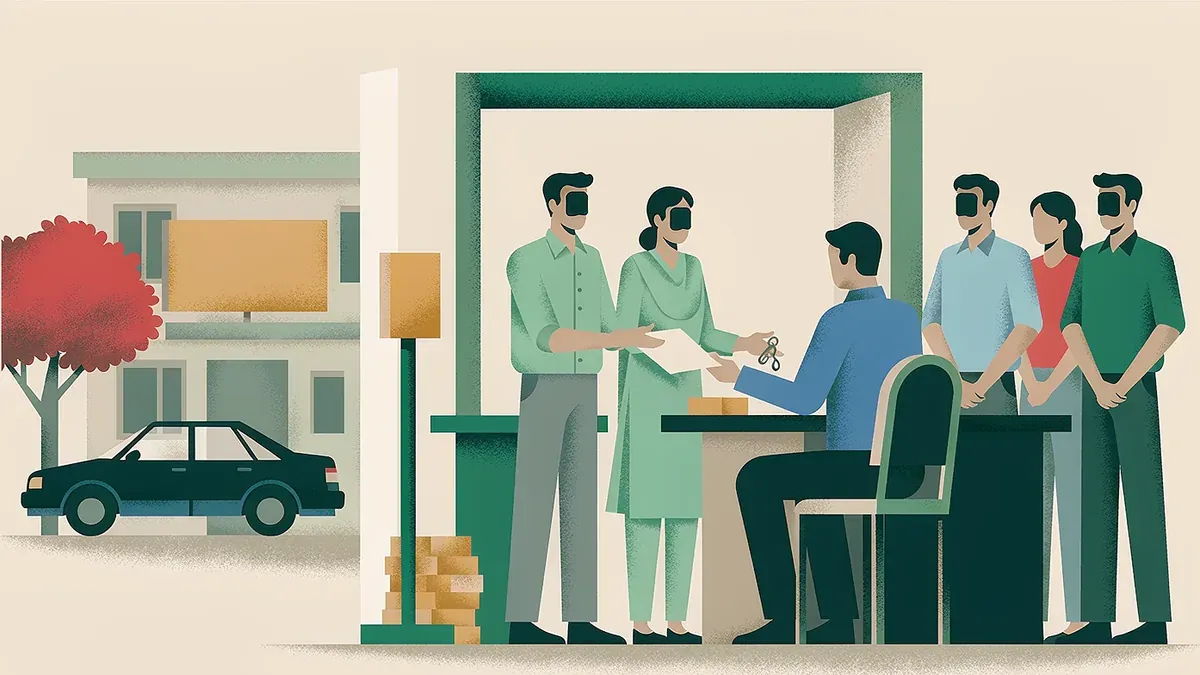
Handing a car to a son, brother, parent or spouse feels like a family matter, but the registration record only changes when the provincial excise and taxation department processes a transfer file. A gift follows the same counter as a sale, with one difference: the instrument recording the change is a gift deed instead of a sale letter, and there is no price to write on it. This guide covers that route from the deed to the new smart card, including the parts that make a gift file stall.
Gift, sale and inheritance are three different files
The department classifies the transaction by the document you bring and by whether the previous owner is alive.
| Situation | Instrument the file needs | Where it is prepared |
|---|---|---|
| Owner alive, vehicle given without payment | Gift deed signed by the owner | Stamp paper, notarised or attested |
| Owner alive, vehicle sold for a price | Sale letter or sale deed stating the amount | Stamp paper, signed by both parties |
| Owner deceased | Succession certificate, letter of administration or an accepted heir declaration | Court, NADRA or the office’s own format |
A living owner cannot use the inheritance route to avoid a gift deed, and a gift deed cannot stand in for succession papers. If the owner has died, the heirs’ file is the correct one, and it usually needs the consent of every heir rather than a single signature.
The gift deed carries the file
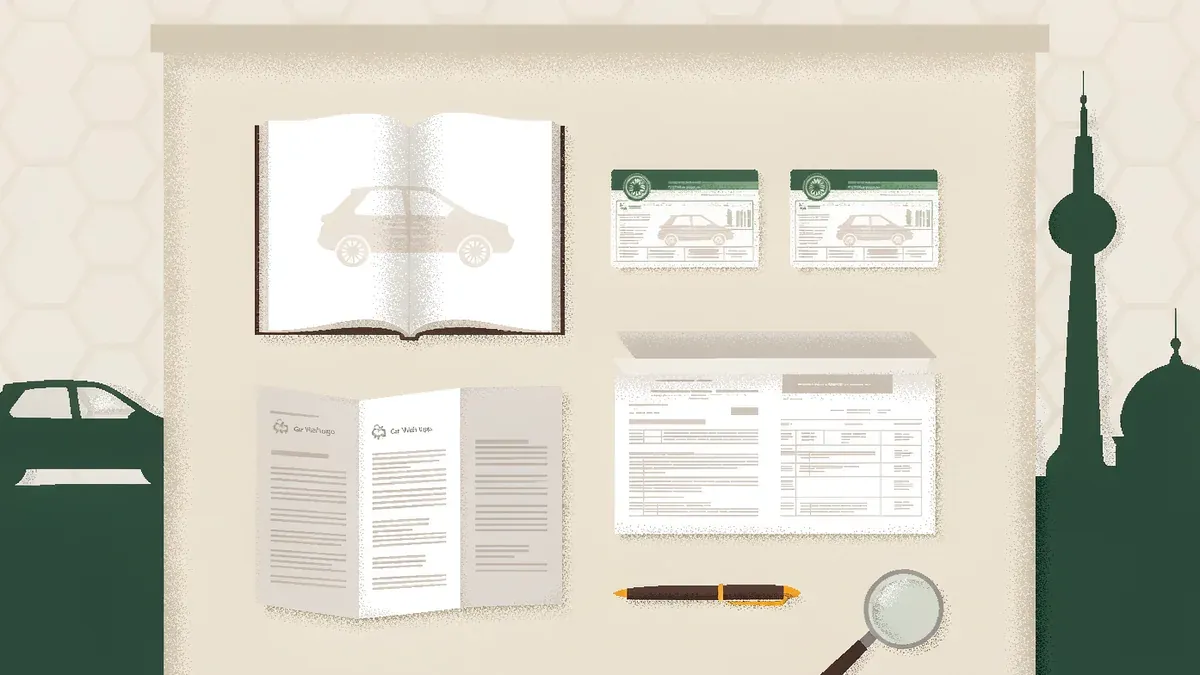
The deed is a short document, but each field is checked against the registration record and the CNICs. It normally states the full names as printed on both CNICs, both CNIC numbers, the registration number, the chassis number, the engine number, the make and model, the date, and a sentence saying the vehicle is being given without consideration. Both parties sign, and two witnesses sign as well.
Three practical points decide whether it is accepted:
- Write the chassis and engine numbers exactly as they appear on the registration book or smart card. A transposed digit sends the file back.
- Use the stamp paper value your province’s stamp schedule requires for a gift instrument. A deed on plain paper is normally refused at the counter.
- Attest or notarise the deed if your province asks for it. Counters vary, so confirm the requirement before paying for attestation.
Where the two parties live in different cities, the deed can be signed in advance and the biometric step completed separately. Where one party is abroad, some offices accept a power of attorney attested by the Pakistani mission, but acceptance is not uniform. Ask the office in writing, or through its portal, before booking anything.
Biometrics, inspection and clearance
Ownership transfer now requires verified identity for both parties.
- Punjab routes transfer applications through the Excise and Taxation services on Dastak, with identity confirmation through the province’s biometric system or a NADRA centre.
- Sindh asks both parties to complete biometric verification at NADRA or an e-Sahulat centre before the excise counter accepts the file, then issues the new smart card after verification.
- Islamabad accepts biometric verification for ownership transfer through the PAK ID application, as described on the Islamabad Excise and Taxation Department site.
- Khyber Pakhtunkhwa and Balochistan generally complete verification at the excise office or a linked NADRA point.
The vehicle itself is usually inspected as part of the file. The inspector compares the chassis and engine numbers on the vehicle with those on the registration record and the deed. A mismatch stops the transfer and, in the worst case, raises a question about the vehicle’s identity that has to be settled before anything else proceeds.
What the counter clears before it records the change
The transfer is not a standalone transaction. The counter checks the vehicle’s standing first, and each pending item is a separate reason to hold the file.
| Check | Why it blocks the transfer |
|---|---|
| Token tax up to the current period | Arrears follow the vehicle, and the department will not move a record with an open period |
| Traffic challans against the registration number | Unpaid fines surface at transfer and are usually settled before approval |
| Bank lien or hire purchase | A financed vehicle needs the financier’s no objection certificate before the owner can give it away |
| Registration book or smart card | The original document is surrendered or endorsed when the new owner is recorded |
| Address proof of the recipient | Utility bill, rent agreement or the CNIC address, depending on the province |
Pay the token tax and any challans before you book an appointment. A file that reaches the counter with a clean record is usually decided in one sitting. One that arrives with arrears turns into a second visit, and sometimes a third.
The value question that surprises families
A gift has no price, but the department still needs a value to calculate its charges. It uses its own schedule, usually a depreciated value for the make, model and year, rather than the figure written on the deed. That has two consequences.
First, a gift is rarely free. Most provinces charge a transfer fee, and a stamp duty applies to the instrument itself. The amounts are set provincially and revised from time to time, so ask the office for the current schedule for your vehicle category rather than relying on a figure from a friend.
Second, a deed that states an unrealistically low value can trigger a query. If the department’s assessed value is far above the deed, expect the fee to follow the assessed value and expect a written explanation to be requested. Keep the valuation slip with your papers.
Province by province
| Province or territory | Where the file is filed | Practical difference |
|---|---|---|
| Punjab | Excise and Taxation services on the Dastak portal or a district office | Application, biometric and fee are handled in one workflow, with an optional doorstep service |
| Sindh | Sindh Excise, Taxation and Narcotics Control district office after NADRA biometric | Both parties verify identity before the file is accepted |
| Khyber Pakhtunkhwa | KP Excise, Taxation and Narcotics Control district office | Inspection and verification are commonly done at the same counter |
| Balochistan | Provincial excise office in the district | Fewer online steps, so plan for attendance in person |
| Islamabad Capital Territory | Excise and Taxation Department office | PAK ID biometric is accepted for ownership transfer |
The gift deed format, the stamp paper value and the fee schedule all follow the province, not the vehicle’s original registration city. A car registered in Karachi but being gifted in Lahore is handled under Punjab’s rules once the file is opened there.
A sequence that clears in one visit
- Confirm the vehicle’s record and dues. Check the token tax position and any challan against the registration number, and settle what is open.
- Get the financier’s no objection certificate if the vehicle was financed, even if the loan is paid off and the lien was never removed.
- Prepare the gift deed with the chassis and engine numbers copied from the registration document, then attest it as your province requires.
- Book the biometric verification for both parties and keep the receipt or transaction reference.
- File at the district office or through the provincial portal with both CNICs, the registration book or smart card, the deed, the tax receipts and the recipient’s address proof.
- Pay the assessed fee and stamp duty, keep the challan, and collect the new registration book or smart card when it is issued.
What to fix before you go
Four problems account for most rejected gift files. A name spelled differently on the CNIC and the registration book needs an affidavit and a corrected record, not an explanation at the window. An expired CNIC is refused outright. A missing registration book needs a duplicate issued first, which is a separate application and a separate wait. And an unresolved family dispute over the vehicle will not be decided by an excise clerk, so settle it or bring a court order.
Once the transfer is recorded, check the new record online, tell your insurer who the registered owner now is, and keep the receipt with the deed. The next buyer will ask for a clean chain, and a gift that was never recorded leaves the vehicle in the previous owner’s name for tax, challan and liability purposes.