
Transfer
How to Transfer a Vehicle After the Owner's Death in Pakistan
Key takeaways
- The department acts on succession evidence; it does not decide who inherits the vehicle.
- Obtain the succession certificate or family declaration before starting anything else.
- Every other heir should give written, named consent to the heir taking the vehicle.
- Clear token tax arrears and replace a lost registration book before applying.
When a vehicle owner dies, the vehicle passes to the legal heirs, but the registration record still carries the deceased owner's name until a succession-based transfer is completed with the provincial excise and taxation department. The process rests on one document above all: evidence of who the legal heirs are and how the vehicle is allotted among them. This guide covers who can apply, the succession paperwork involved, how the department handles the file, and the delays families most often hit.
Who can apply for the transfer
The registration authority does not decide who inherits; it acts on succession evidence supplied by the family. In practice the applicant is one of the legal heirs, usually the person who will keep and use the vehicle, acting with the written consent of the others.
- If the deceased left a will naming a beneficiary for the vehicle, the will plus probate or the equivalent proof is the starting point.
- If there is no will, the heirs are determined under the personal law applicable to the deceased, and a succession certificate or a letter of administration from a civil court is the usual evidence.
- Where the family agrees, a notarised declaration signed by all heirs, supported by their CNICs, is often accepted for a vehicle of modest value. Departments differ on this, so ask before you rely on it.
Only heirs should apply. A transfer based on a claim of inheritance that other heirs dispute will be challenged, and a department that learns of a dispute will normally hold the file. Resolve the family question first, then approach the counter.
The succession paperwork
A death-based transfer file normally contains the death certificate, the CNIC of the deceased, CNIC copies of all heirs, the succession certificate or letter of administration (or the family declaration where accepted), and the original registration book or smart card.
Where one heir is to become the sole registered owner, the others record their consent. This is usually done through a no-objection or relinquishment statement naming the heir taking the vehicle, signed by each of the others. Where heirs are minors, a guardian appointed by a court represents them, and the department will ask for the guardianship order.
Have the consent document drafted carefully. A vague statement that the vehicle "may be transferred" invites questions; one that names the heir, the vehicle and the date closes them.
The transfer process at the department
- Obtain the succession evidence. A court-issued certificate takes time; apply for it early, because everything else waits on it.
- Clear dues on the vehicle. Outstanding token tax and any challans recorded against the registration are settled as part of the file.
- Submit the transfer application. The heir applies to the registering authority, attaching the succession documents, consent statements, death certificate, CNIC copies and the registration book or smart card.
- Complete verification. Expect standard verification of the vehicle record and, where required, biometric verification of the applicant.
- Pay the transfer charge and collect the updated record. The charge follows the province's published schedule for the vehicle type.
Where the heirs intend to sell the vehicle instead of keeping it, the practical order is to transfer it into the name of one heir first and then sell it from that name. Buyers are entitled to deal with the registered owner, and a clean chain makes the later sale straightforward.
Common delays and how to reduce them
- A succession certificate is still pending. This is the single longest delay. Start the court application before anything else.
- One heir lives abroad or cannot attend. A consular-attested or properly witnessed power of attorney from that heir, naming someone to sign locally, removes the blockage.
- The registration book is lost. Apply for a duplicate first; a death-based transfer cannot proceed without the original record or its replacement.
- Token tax has gone unpaid for several years. The arrears have to be cleared, and older records sometimes need reconciliation at the department before the amount can be settled.
- Heirs disagree. No procedure at the counter resolves a family dispute. Settle it, or obtain a court order, before applying.
Begin with the succession evidence, gather consent from every heir in writing, then confirm the current document list and transfer charge with your provincial department. Families who start with the certificate and the consent statements usually finish in one or two visits.
Keep reading
Vehicle Transfer of Ownership Process in Pakistan: Step by Step
Vehicle transfer of ownership in Pakistan runs through sale letter, application, verification, fee and record update. Confirm your province's current fee first.
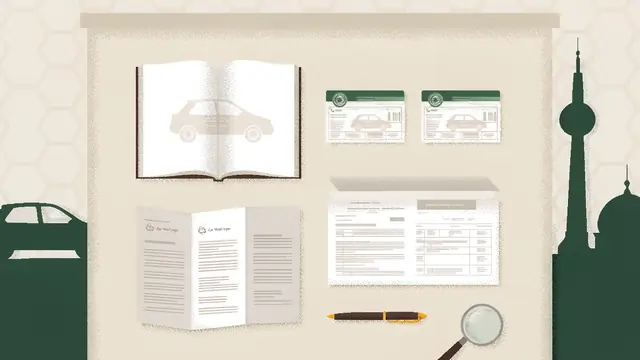
Documents Required for Vehicle Transfer in Pakistan
Documents required for vehicle transfer in Pakistan: registration book, CNIC copies, sale letter, token tax clearance. Check your province's checklist.
Vehicle Transfer Charges in Pakistan: How the Total Is Worked Out
Vehicle transfer charges in Pakistan combine a transfer fee, stamp duty, document issue and dues. See how the total varies and confirm it before paying.