
Transfer
Vehicle Transfer Charges in Pakistan: How the Total Is Worked Out
Key takeaways
- A transfer total combines several separate charges, not one fixed fee.
- Each province publishes its own schedule, so totals differ across Pakistan.
- Engine capacity, vehicle category and stated sale value change the figure.
- Request an itemised breakdown and verify it against the current schedule.
Vehicle transfer charges in Pakistan are not one fee but a small set of separate charges assessed together when the file is filed: a transfer fee to the provincial excise and taxation department, stamp duty on the sale instrument where the province levies it, a charge for issuing the registration book or smart card in the buyer's name, and settlement of any dues that must be cleared before the record can move. Because each part is worked out on its own basis, the total differs between provinces and between vehicles. This guide explains what each component covers, why two similar cars can produce different totals, and how to confirm the figure that applies to you before you pay.
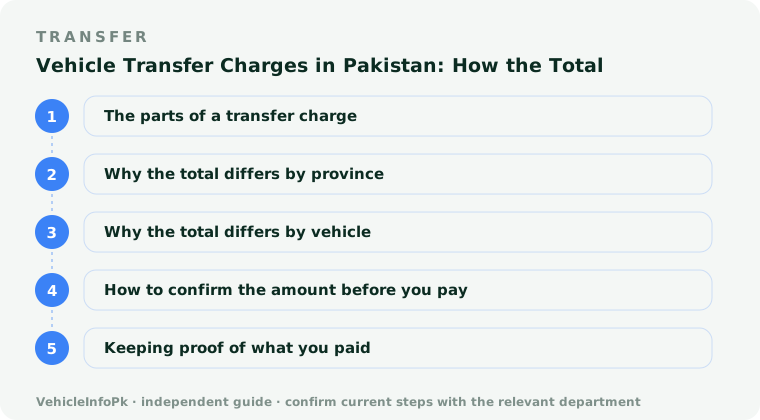
The parts of a transfer charge
Most files break down into the same handful of components. Asking for each one separately is the fastest way to understand a figure you have been quoted.
- Transfer fee. The department's charge for processing the change of ownership and updating its record. This is usually a fixed or banded amount set under a provincial schedule of charges.
- Stamp duty. A duty on the sale instrument itself. Where it applies, it is generally worked out against the value stated in the sale letter or sale deed rather than as a flat sum. Some provinces levy it on the transfer; others treat the transaction differently, so this is the component that varies most.
- Registration book or smart card fee. The charge for producing the ownership document in the buyer's name. A smart card and a printed book can carry different production charges.
- Clearance of dues. Outstanding token tax, and in some cases penalties already on the vehicle record, are normally settled as part of moving the file forward. These are not transfer charges, but they appear on the same visit.
- Ancillary items. Verification, biometric attendance or courier charges may be added depending on how the province handles the file and whether the application is filed in person.
Why the total differs by province
Vehicle taxation is a provincial subject. Each of Punjab, Sindh, Khyber Pakhtunkhwa, Balochistan and the Islamabad Capital Territory publishes its own schedule of charges, decides whether stamp duty applies to a transfer, and sets how the registration document is produced and priced. There is no single national figure.
The practical consequences are straightforward. A motorbike transferred in one province can cost noticeably less or more than the same motorbike transferred in another, and a charge that exists in one province may have no equivalent next door. Figures you find quoted online or passed on by a dealer are usually specific to one province and one period. Treat them only as a rough indication.
Why the total differs by vehicle
Within a single province, two vehicles can still produce different totals.
| Factor | How it affects the total |
|---|---|
| Engine capacity | Many schedules band charges by cubic capacity, so a 1000cc car and a 1300cc car fall into different bands even when their market values are close. |
| Vehicle category | Cars, motorcycles, commercial vehicles and rickshaws are commonly treated under separate heads. |
| Stated sale value | Where stamp duty is assessed against the value written on the sale instrument, a higher stated value raises that component. |
| Document type | A smart card and a registration book are priced differently to produce. |
| Outstanding dues | Unpaid token tax or penalties already recorded against the vehicle are added to what is payable on the day. |
The value written on the sale instrument should reflect the price actually agreed. Departments work from documented figures, and a figure that bears no relation to the transaction can cause questions later when the same vehicle is transferred again.
How to confirm the amount before you pay
- Note the vehicle's details exactly. Engine capacity, category, and current registration province determine which band applies.
- Check the provincial schedule. The excise and taxation department publishes its schedule of charges; read the entry for your vehicle category and capacity.
- Ask for an itemised figure at the counter or through the department's portal. Request each component separately rather than a single combined number, so you can see what you are paying for.
- Confirm whether dues are outstanding. Check the token tax position before the visit, and agree with the other party in writing who settles any arrears.
- Expect a small difference on the day. Schedules are revised, so treat a quote from weeks earlier as indicative and confirm it again close to filing.
Keeping proof of what you paid
Keep the challan, the treasury receipt or the transaction reference for every component, along with a copy of the application receipt. Together these show that the transfer charge was paid and the file filed, which is what you need if the ownership record later fails to update. Both parties should keep their own copy, and neither should treat a verbal confirmation that payment was made as sufficient.
Agree in writing which side pays which component before you attend, then confirm the itemised amount against your province's current schedule on the day you file. Keep every receipt with the application reference so you can show later that the transfer was properly paid for and submitted.
Keep reading
Vehicle Transfer of Ownership Process in Pakistan: Step by Step
Vehicle transfer of ownership in Pakistan runs through sale letter, application, verification, fee and record update. Confirm your province's current fee first.
Documents Required for Vehicle Transfer in Pakistan
Documents required for vehicle transfer in Pakistan: registration book, CNIC copies, sale letter, token tax clearance. Check your province's checklist.
What Happens If a Vehicle Transfer Is Never Completed in Pakistan
If a transfer is never completed, the record still names the seller. See the risks for both sides in Pakistan and how to restart a stalled transfer.