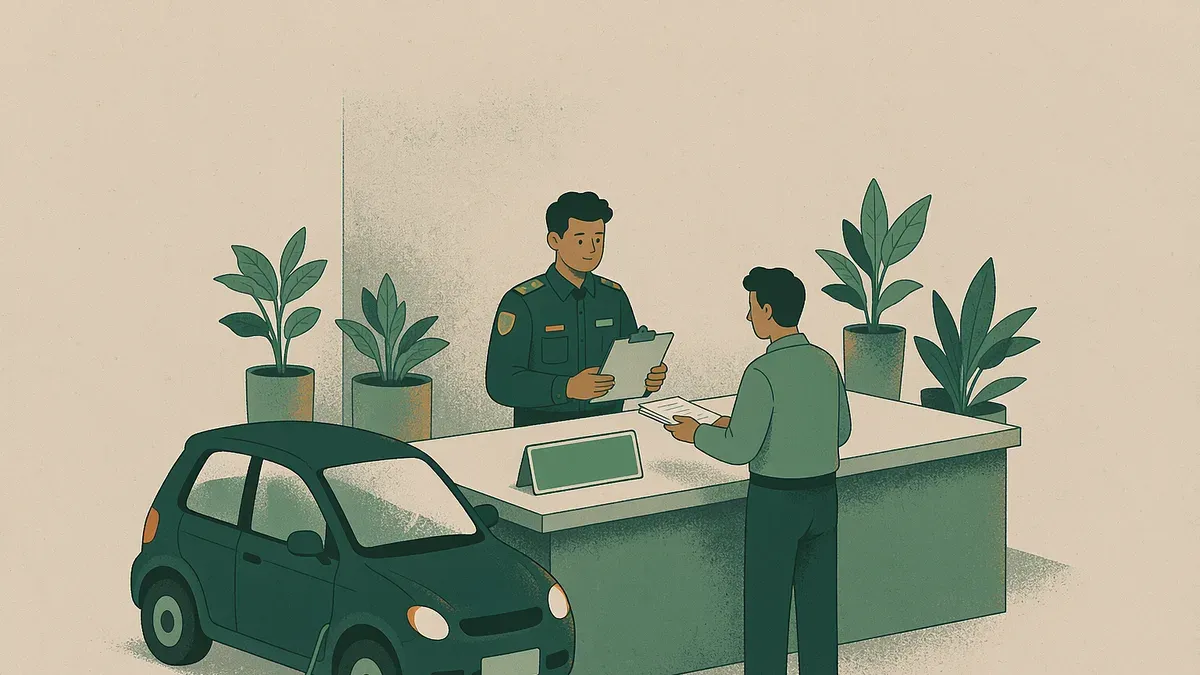
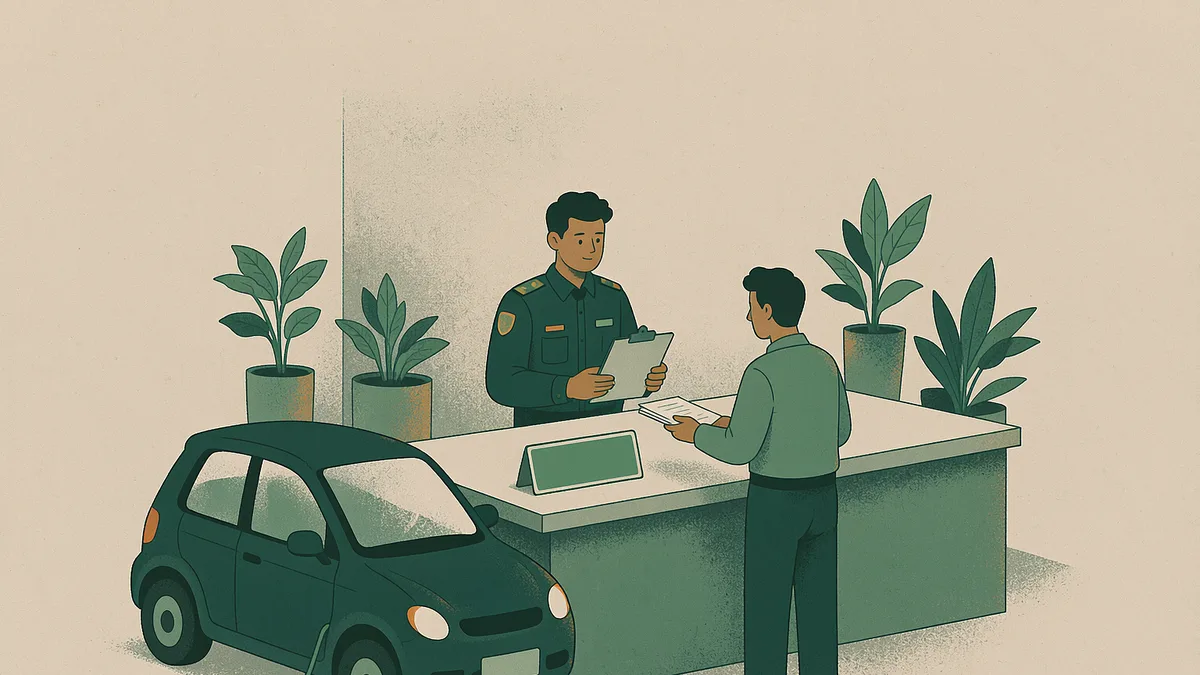
An electric vehicle goes through the same registration counter as a petrol car, but its file differs at three points: there is no engine number, the tax class is set by motor power, and Punjab issues a different plate. This guide is for a buyer who has taken delivery of an EV, cleared an imported one through customs, or is about to pay a dealer and wants to know what the registration file must contain.
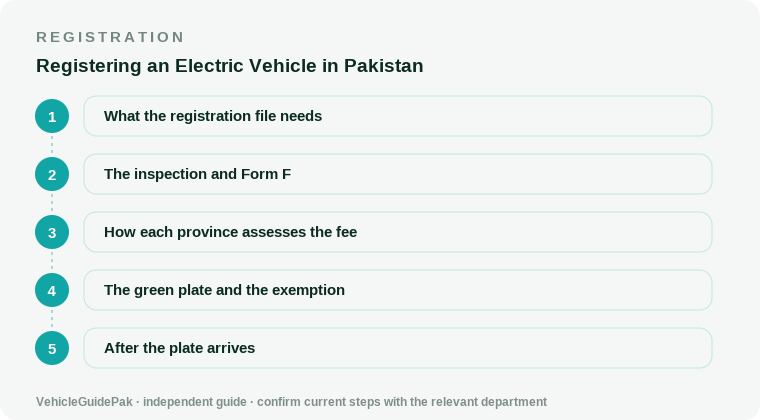
What the registration file needs
The base set follows the ordinary registration checklist. Islamabad’s excise department lists a CNIC copy, an application to the Excise and Taxation Officer, proof of purchase and proof of residence. For a locally assembled vehicle, proof of purchase means the sale invoice and sale certificate. For an import, it means the bill of entry, bill of lading and the old registration book where one exists.
The EV-specific work sits inside those papers. The invoice has to identify the vehicle by chassis number, motor number and motor power in kilowatts. A battery capacity figure helps where the province taxes by kWh, and it is often printed on the same line as the motor rating. If the invoice has a blank where an engine number would normally go, the inspection has nothing to match and the file goes back to the dealer.
Proof of residence is checked as carefully as the invoice. Utility bills, a lease agreement, property registry, an allotment letter or a government office card are accepted in Islamabad. A CNIC address in another district can send the applicant to a different office, which is a common reason for a wasted trip.
The inspection and Form F
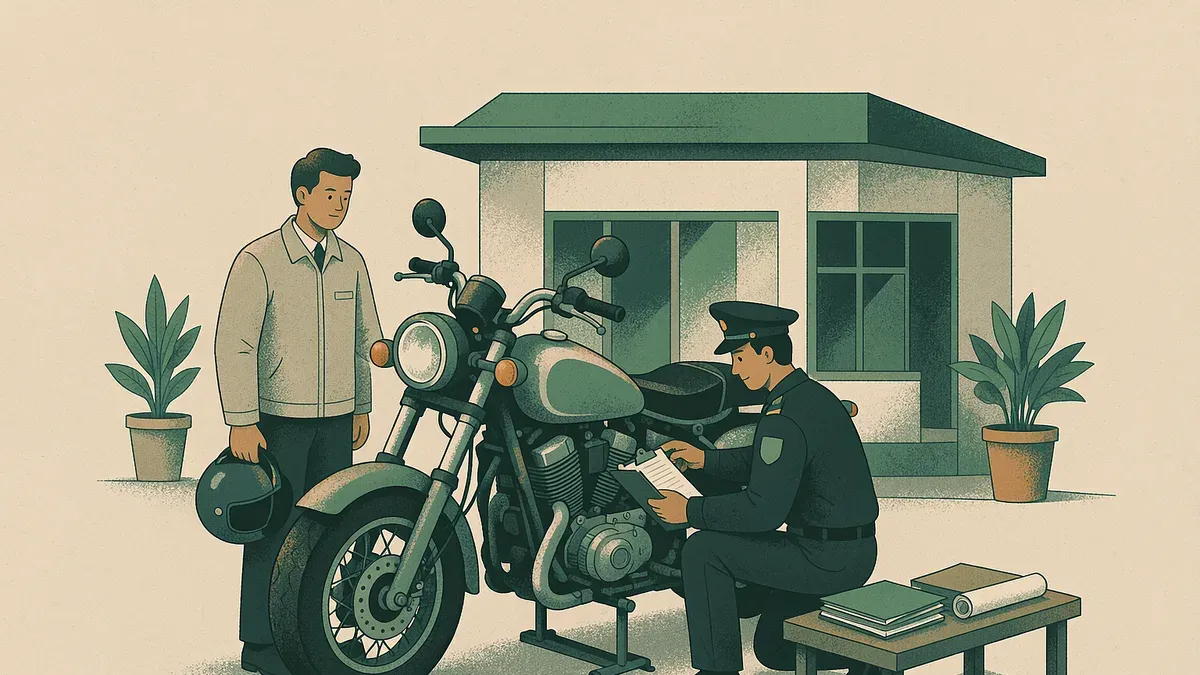
The vehicle is presented for physical inspection, and the inspector records the chassis number and motor number on Form F. On a petrol vehicle this step also records engine capacity in cc. On an EV there is no capacity to record, so the form carries the motor rating and the fuel type instead.
Two mismatches stop this stage. A motor number that differs from the invoice, even by a transposed digit, needs a corrected invoice or a letter from the manufacturer before the inspector will sign. A vehicle recorded as petrol when it is electric, which happens with conversions and with some imported units, sends the file back for a fuel type correction.
Punjab’s document list also covers a conversion, where a petrol vehicle has been changed to electric. That route needs Form F with an endorsement from the Motor Vehicle Examiner, plus the CNIC and the updated registration certificate. Without the endorsement, the record still describes the old engine.
How each province assesses the fee
Registration fees are set by the province, and an EV does not fit the engine capacity bands that most schedules were written around. Khyber Pakhtunkhwa’s motor vehicle tax page shows the usual structure: 1 percent of value up to 1300cc, 2 percent from 1300cc to 2500cc, and 4 percent above 2500cc, with motorcycles at 1 percent. An EV has to be placed somewhere in that structure, and the province decides whether to use motor power directly or convert it.
| Province | Basis for the EV fee | What to confirm at the counter |
|---|---|---|
| Punjab | Registration fee on value, with an EV exemption applied | The exemption percentage on the printed challan, and whether the plate charge is separate |
| Sindh | A fixed registration fee under the provincial EV package | The current notification, since the department site may not show an EV entry |
| Khyber Pakhtunkhwa | Motor power in kW, or a percentage of value where the schedule applies | Whether the exemption note covers your vehicle class and the date it runs to |
| Balochistan | Motor power converted to an equivalent engine capacity | The assessment itself, which is commonly done at the district office |
| Islamabad Capital Territory | Registration fee plus advance tax, token tax and income tax | Whether token tax is zero on the challan while income tax remains payable |
The Islamabad formula separates four charges: registration fee, advance tax, token tax and income tax, with professional tax added for a commercial vehicle. An EV exemption usually targets the token tax and sometimes the registration fee. Income tax is a federal withholding charge and can survive a provincial exemption, so a challan that shows zero token tax may still carry a large income tax line.
The green plate
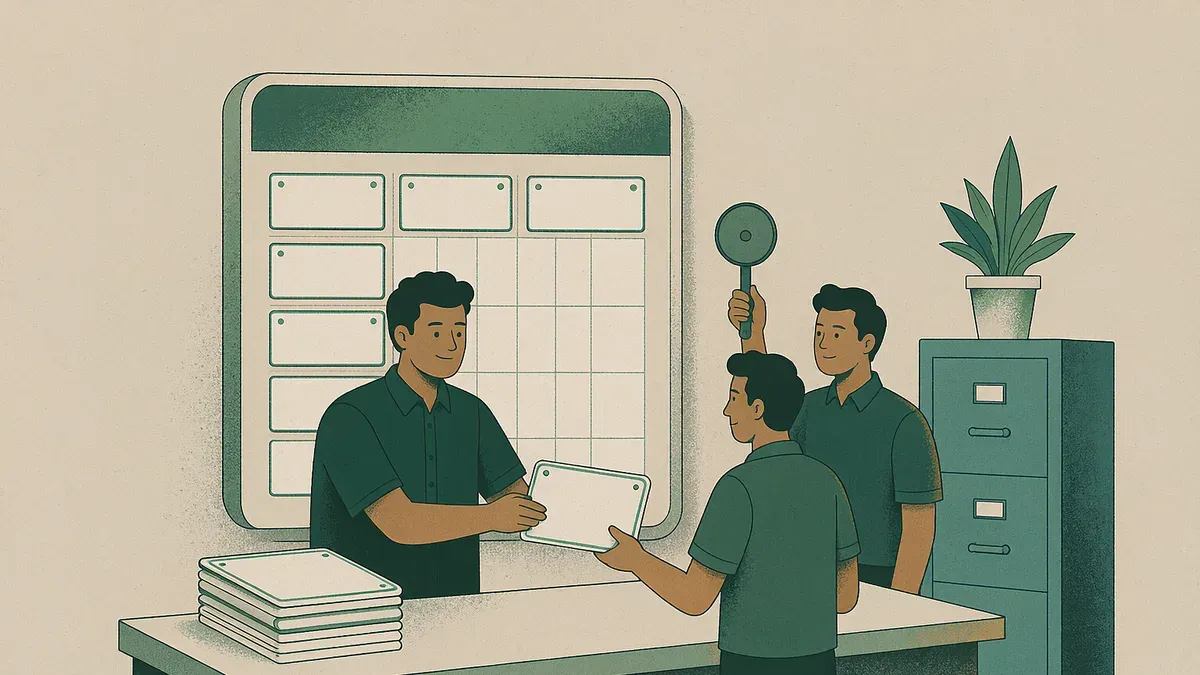
Punjab now issues green number plates to registered electric vehicles. The plate is produced against the registration record and handed over with the registration book or smart card, so there is no separate green plate application to file.
Do not buy a green plate from a plate maker before the record exists. A plate that does not match the recorded fuel type is a documentation problem at a checkpoint and again at transfer, when the buyer’s application is checked against the file.
Outside Punjab, ask the registering office whether a distinct EV plate is issued. Sindh, Khyber Pakhtunkhwa, Balochistan and Islamabad run their own plate and smart card arrangements, and Khyber Pakhtunkhwa has been moving to a universal plate and smart card system. What proves the vehicle is electric is the fuel type on the registration record.
Paying without losing the exemption
Read the challan before the money leaves your hand. The exemption is applied at assessment, and once a full payment is posted, recovering the difference becomes a refund or adjustment application with its own paperwork. Ask the data entry operator to correct the class and reprint the slip before payment.
The same applies to the registration fee. Punjab applies a large exemption to both the registration fee and the annual motor vehicle tax for electric vehicles, and the percentage is set in the provincial schedule. Treat any figure a dealer quotes as an estimate and check the printed amount.
Keep the paid challan, the invoice, the sale certificate, the Form F copy and the smart card together. A later transfer, a token tax query or an insurance claim will ask for the same set, and a missing invoice is harder to replace than a photocopy.
After the plate arrives
Check four fields on the smart card before you file it away: the owner name as spelled on the CNIC, the chassis number, the motor number and the fuel type. A wrong fuel type can keep the vehicle on the petrol schedule, and a wrong motor number can block a transfer years later. Corrections need a separate application.
An electric motorcycle follows the same route with a smaller document set, and its registration fee is usually a percentage of value rather than a capacity band. Ask whether the provincial exemption covers two wheelers, because a note written for electric four wheelers can leave an e-bike paying the standard rate.
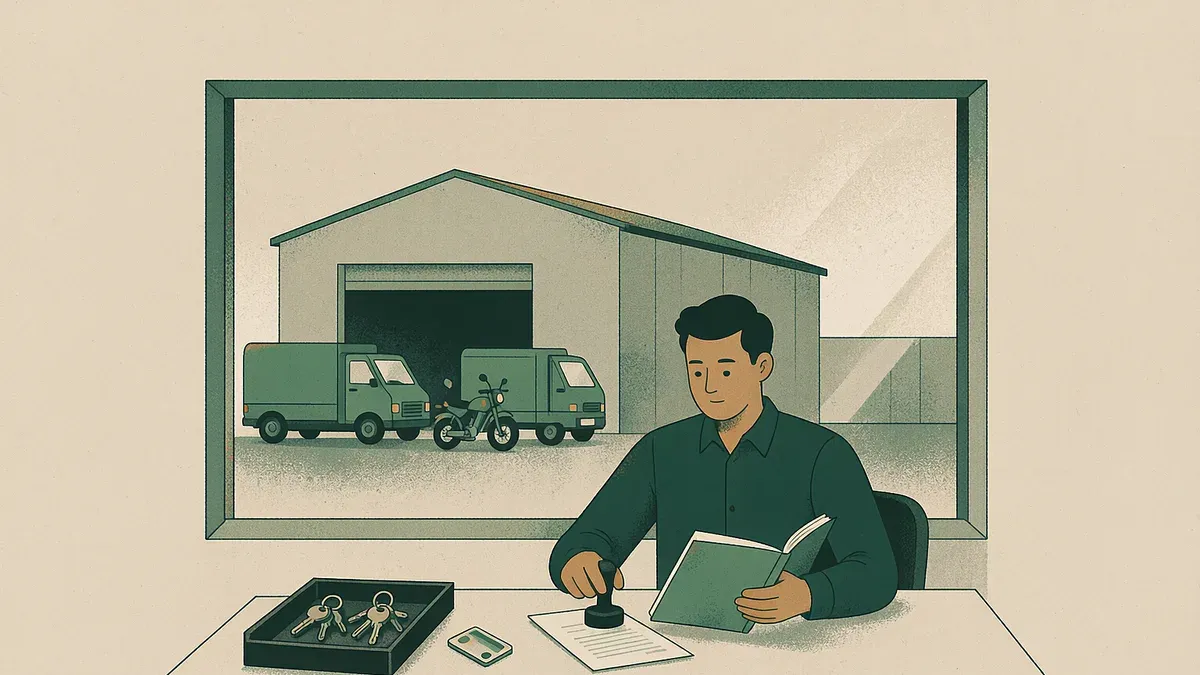
If the vehicle was imported, the registration comes after customs clearance, and the bill of entry becomes part of the file. Keep the customs papers with the registration documents rather than in a separate folder, since a later transfer will ask for the full chain.
Register the vehicle in the district where you actually live, bring the invoice and motor details the inspector can match, and ask for the exemption to be applied before you pay. That sequence keeps the file clean and avoids the two most common delays: a mismatched motor number and a challan paid at the petrol rate.