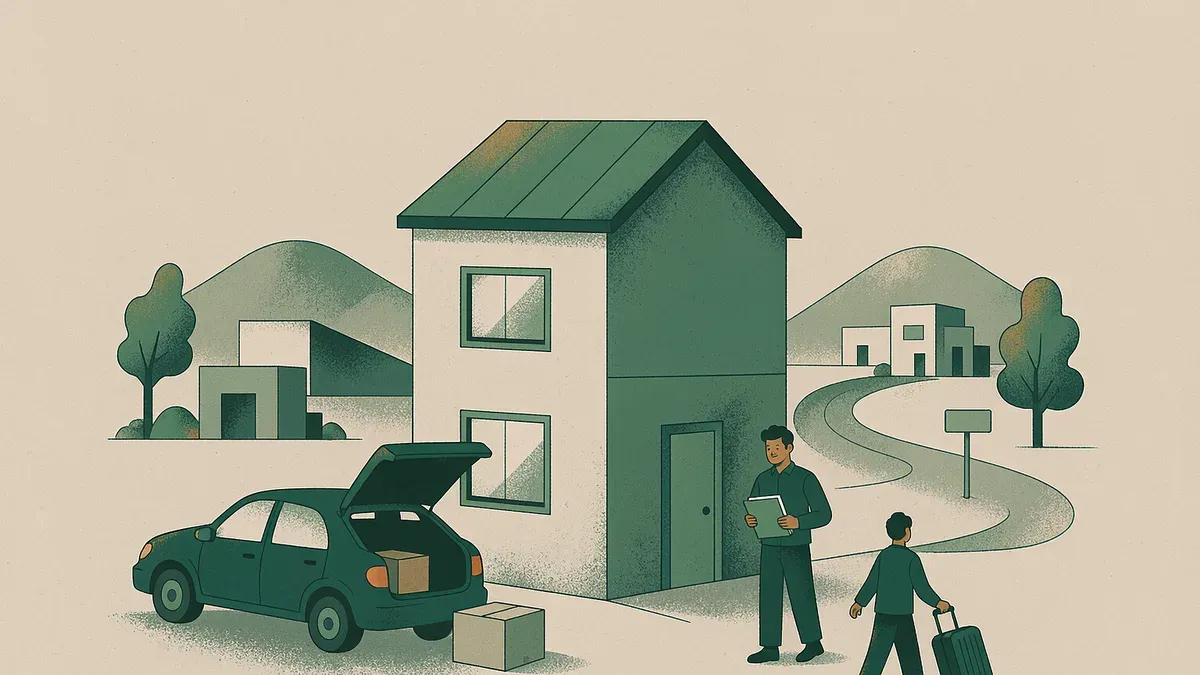
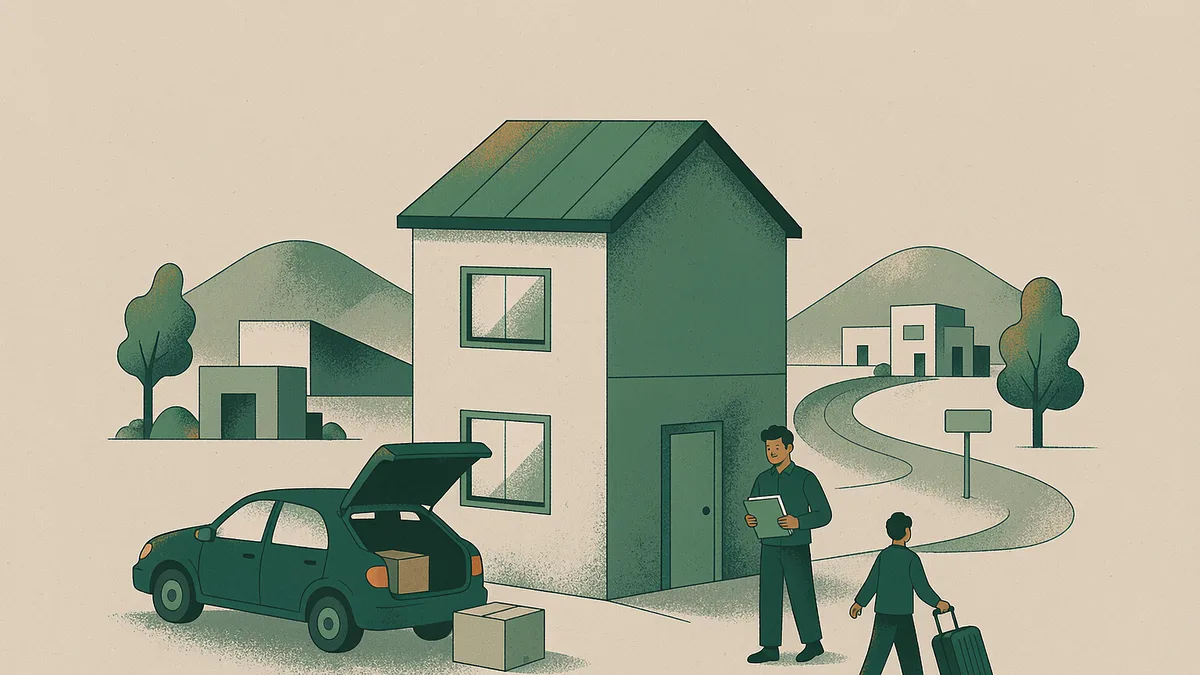
A vehicle registered in one province can be driven in another for a visit, but once the owner’s residence changes, the file is expected to follow. This guide is for someone who has moved for work, family or business and is still carrying plates from the old province. It covers the NOC, the clearance papers, the new number and the advance tax that can appear at re-registration.
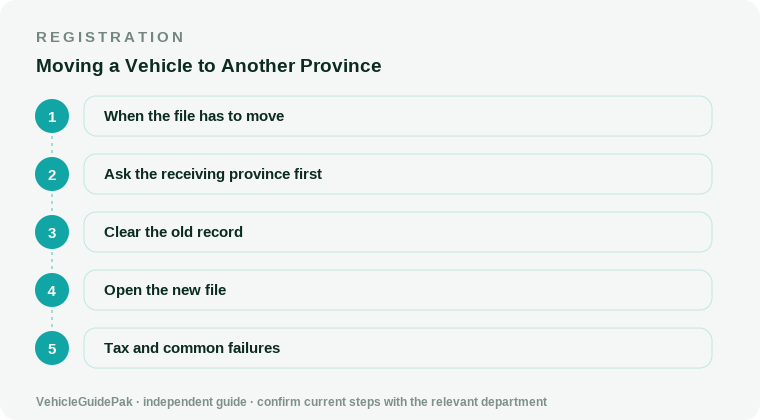
When the file has to move
A change of address is not the same as a change of ownership. The owner stays the same, and the vehicle keeps its chassis and engine numbers. What changes is the district and province that hold the registration record, the plate series and the authority that collects token tax.
The move matters at a roadside check, when token tax falls due and at resale. A buyer in the new province will ask for a local number and a clean file.
If the vehicle is under a bank lease, get the bank’s NOC before the file moves. Islamabad’s transfer page requires an NOC or transfer letter from the bank or leasing company for a leased vehicle, and the same principle applies when a leasing company is the recorded owner.
Ask the receiving province first
Rules differ by province, and the receiving office decides what it will accept. Asking there first saves a trip to the wrong counter.
Islamabad’s transfer page, for a vehicle registered in another district, asks for proof of residence in Islamabad, a copy of the registration book, a copy of the complete vehicle registration file, the original file if the old department has returned it, and an NOC from the relevant Excise and Taxation Department. The same page quotes a processing fee of Rs 1,200 to Rs 3,000 and a processing time of four weeks.
Punjab has a re-registration route for vehicles and motorcycles registered in Khyber Pakhtunkhwa, Sindh, Balochistan, Gilgit-Baltistan and Azad Kashmir. The reported requirements are an NOC from the originating province, a vehicle clearance certificate, a Police 15 report, the complete vehicle file and an owner’s affidavit, followed by biometric verification. The new Punjab number is issued for the city of residence, the old number is cancelled, and a letter goes to the originating province.
Sindh, Khyber Pakhtunkhwa and Balochistan handle the same request through the district excise office. Ask whether the province has a prescribed NOC format and whether it wants the physical file or a digital record.
The paper chain
Start with the NOC, because everything else is built on the old province confirming that the record is clean.
| Stage | What you need | Who issues it | What blocks it |
|---|---|---|---|
| NOC | Application, CNIC, registration book, token tax clearance | Excise office of the old province | Unpaid token tax or an open challan |
| Clearance certificate | Confirmation that the vehicle is free of dues and not held in a case | Old province excise office | A pending case or a mismatch in the record |
| Police 15 report | Police verification of the vehicle and owner | District police | An adverse entry or a stolen report |
| Vehicle file | Original registration file and supporting forms | Old province excise office | File missing, or held under a return scheme |
| Biometrics and affidavit | CNIC, fingerprint, sworn statement | NADRA and the excise office | Owner not present in person |
| New registration | Form F, address proof, fee and token tax | Excise office of the new province | Address proof in another person’s name |
A NOC does not change ownership. If the owner is also changing, handle both at one counter, or you will pay two sets of fees.
Clearing the old record
Token tax is the usual blocker. The old province will not issue an NOC while an annual period is unpaid, and a single open challan can hold the file. Pay the outstanding period, keep the challan, and ask for the clearance to be recorded before you apply.
Check the registration book against the vehicle before you travel. The chassis number and engine number must match, and the owner name must match the CNIC. A mismatch that was tolerated for years becomes a refusal at the NOC counter and needs a separate correction application.
Ask how long the NOC remains valid, because some offices date it. Keep at least two copies, one for the new file and one for your records.
Opening the new file
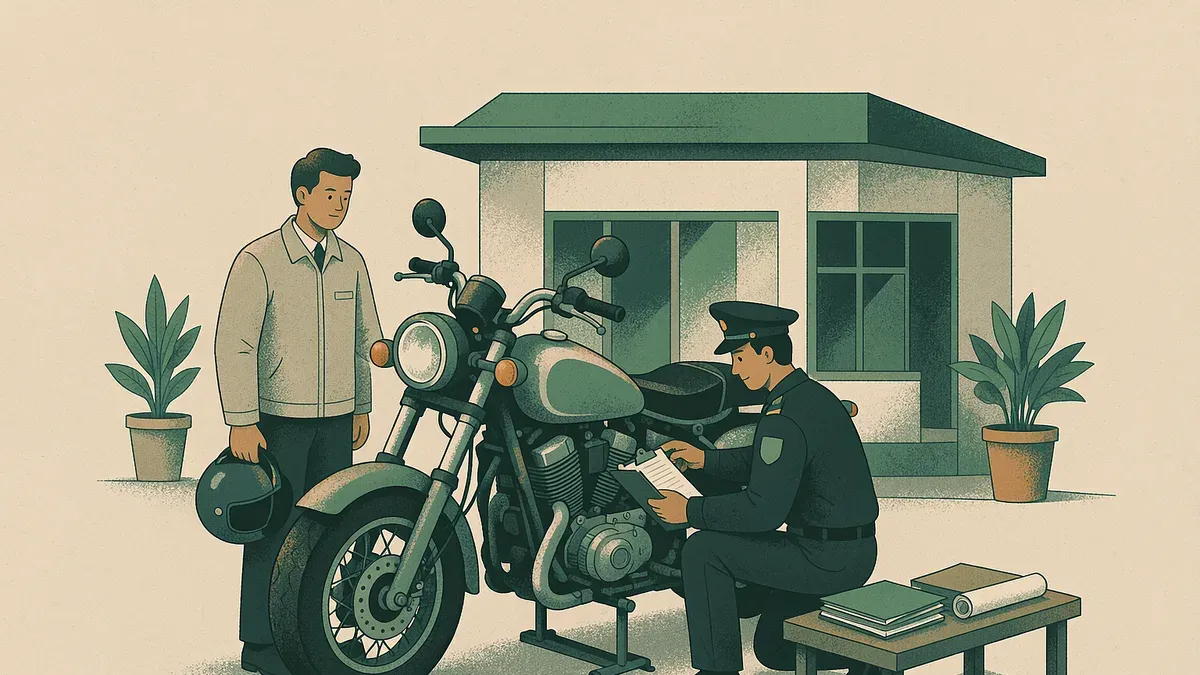
The new province treats the vehicle as a fresh registration for its own records. You will present Form F, the NOC, the clearance papers, the old registration book, proof of residence and the vehicle itself for inspection. The inspector checks the chassis and engine numbers against the file, and the plate is issued against the new record.
Do not keep using the old plate after the old number is cancelled. Hand it in or destroy it as the office directs, and keep a copy of the cancellation letter.
Update the insurance address at the same time. A policy that still names the old province can complicate a claim.
The tax that appears at re-registration
Re-registration is not free, and the largest surprise is often advance tax rather than the registration fee. Islamabad’s transfer page notes that advance tax applies to vehicles with less than five years since first registration in Pakistan, with 10 percent depreciation for each year. A three-year-old car can therefore carry a charge that was not in the budget for a plate change.
Token tax also starts again in the new province. Khyber Pakhtunkhwa’s motor vehicle tax page sets registration fees at 1 percent of value up to 1300cc, 2 percent from 1300cc to 2500cc and 4 percent above 2500cc. Punjab, Sindh and Balochistan use their own schedules.
Ask for an itemised quote before paying. The counter can usually print the breakdown, which shows whether advance tax, registration fee, token tax and any plate charge have been applied.
What goes wrong
The most common failure is an old record left open. The owner registers in the new province but never closes the old file, so the old province keeps issuing token tax demands. Recovering a duplicate payment takes a separate application.
The second is an NOC without the file. The new office opens a record while the old one still exists, which creates two live entries for one chassis number. A later transfer stalls because the provinces disagree about which record is current.
Address proof causes delays. Islamabad accepts a utility bill, CNIC, lease agreement, registry, allotment letter or government office card. Where the applicant lives with someone else, that person must appear and swear an affidavit.
A plate swap before cancellation is another trap. A new plate while the old record is open creates a mismatch between the plate, the book and the database. Wait for the new registration before changing anything.
Province notes
Punjab runs a dedicated re-registration route for out-of-province vehicles, with NOC, clearance certificate, Police 15 report, biometrics and a new city number. Islamabad requires the NOC, residence proof and the complete file, quotes four weeks and charges Rs 1,200 to Rs 3,000. Khyber Pakhtunkhwa and Sindh route the request through the district excise office, and Balochistan does the same with fewer online steps.
Start with the province that holds the file, clear the tax and the challans, and ask the receiving office to confirm its checklist in writing. Then move the vehicle, the file and the insurance address in that order.