A 70cc commuter is often registered by the dealer, with little paperwork in the buyer’s hands. A larger motorcycle puts the value of the machine at the centre of the file: the registration fee is usually a share of it, the papers may include customs clearance, and the inspection looks at stamps that are harder to reach. That difference matters most for imported machines, where the customs valuation and the showroom invoice can be far apart. This guide covers the papers, the basis of the charges and the inspection for a motorcycle above 150cc, whether it was bought new from a dealer or brought in used.
Why capacity changes the paperwork
The capacity on the engine decides which line of the provincial schedule applies. Below the top of the commuter range, several provinces charge a fixed registration fee by capacity band. Above it, the fee is a percentage of the vehicle’s value, which means the price on the invoice has to be documented and defensible.
The provinces do not draw the line in the same place. Punjab and Sindh step up to a percentage of value at the upper end of the capacity range. Khyber Pakhtunkhwa applies 1 percent of value to every motorcycle on its motor vehicle tax page, so a small bike and a large one are treated the same way there, with the value doing the work. Islamabad works from Form F and a fee formula rather than a single rate.
The rate is provincial and the base is value, so a low invoice in one province and a customs valuation in another produce different totals for the same model.
Papers for a new or imported motorcycle
The common set is short, and most delays come from one document being in the wrong name.
| Paper | New from a dealer | Used import |
|---|---|---|
| Purchase proof | Sale invoice and sale certificate from the dealer | Bill of entry, bill of lading and duty-paid receipts |
| Identity | CNIC of the buyer | CNIC of the buyer, matching the import documents |
| Application | Registration application and Form F where the province uses it | Same, with the customs papers attached |
| Prior record | Not applicable | Foreign registration document where one exists |
| Inspection | Chassis and engine numbers checked at the counter | Full inspection, including the frame and engine stamps |
The name on the purchase documents must be the name on the CNIC. A bike bought by one brother and registered in another’s name creates a mismatch that can only be fixed later by a transfer, which costs another fee and another set of papers. Check the spelling before the file is submitted.
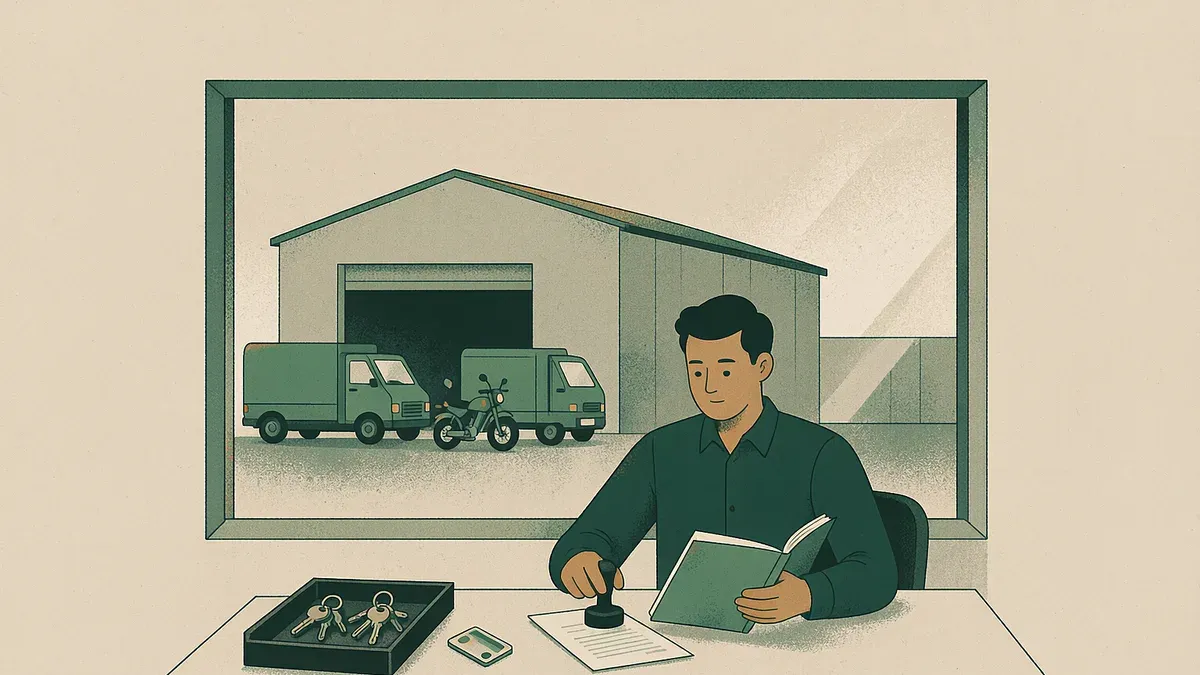
An import also needs proof that duty and sales tax were paid. Islamabad’s registration page accepts a bill of entry, bill of lading and the old registration book for an imported vehicle. A machine that entered without clearance cannot be registered on a dealer’s slip, and the office will send the file back until the customs position is settled.
How the fee is assessed
Registration is a set of charges, each with its own base. The counter will normally generate a single challan that adds them together.
| Charge | Base | What to check |
|---|---|---|
| Registration fee | Percentage of vehicle value, or a capacity band in some provinces | Which value the office will use for an import |
| Advance tax under section 231B | Engine capacity above 200cc, filer or non-filer rate | Whether the maker or the excise office collects it |
| Token tax | Capacity band, annual or lifetime depending on province | Whether a lifetime payment applies |
| Number plate package | Fixed price per pair, book and third plate | Whether the dealer has already charged for it |
| Smart card | Fixed fee where a card is issued | Whether it is included in the package |
Khyber Pakhtunkhwa publishes the plate package for a motorcycle, scooter or rickshaw at Rs 892, covering a pair of plates, the registration book, a third plate and scanning. It also publishes the late-registration penalty: Rs 200 up to six months and Rs 500 beyond, on a 60-day window from purchase or import.
Section 231B of the Income Tax Ordinance applies to motor vehicles above 200cc, so a 250cc or 400cc machine carries an advance tax that a 125cc commuter does not. The amount is adjustable against income tax, and the non-filer rate is higher. Ask the dealer whether the tax was collected at sale, because paying it twice and reclaiming it is slower than checking first.
For an import, settle the valuation before the inspection. The excise office may work from the customs-assessed value rather than the price paid abroad, which changes both the registration fee and the advance tax.
Inspection day
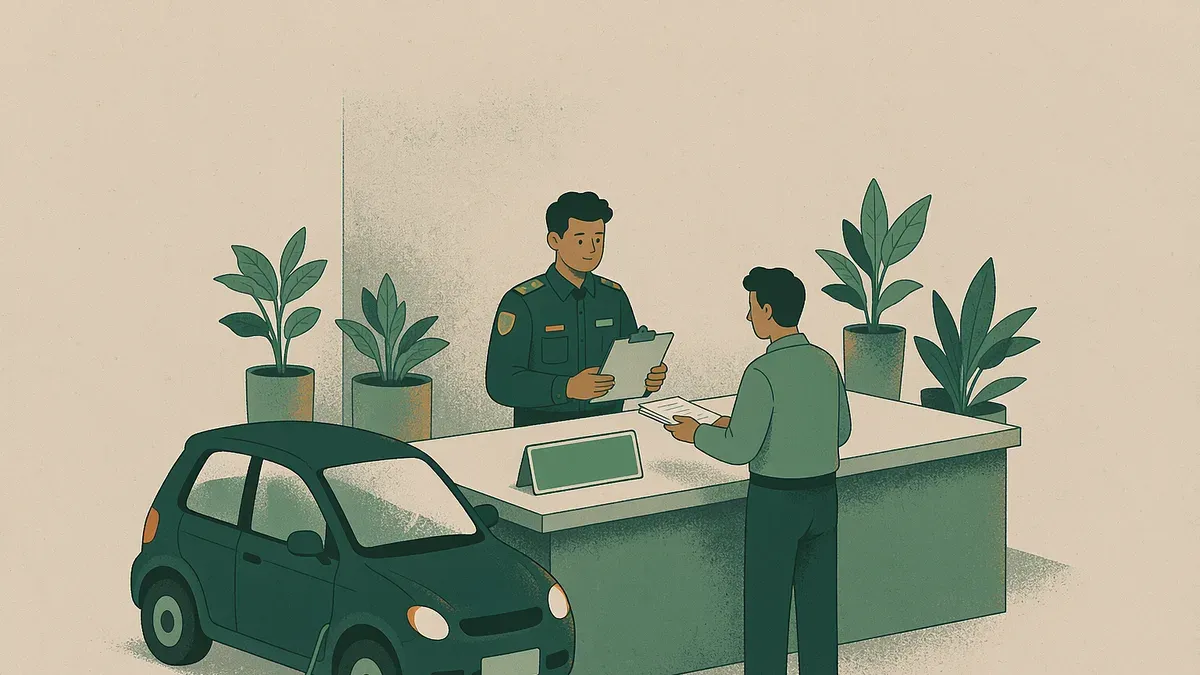
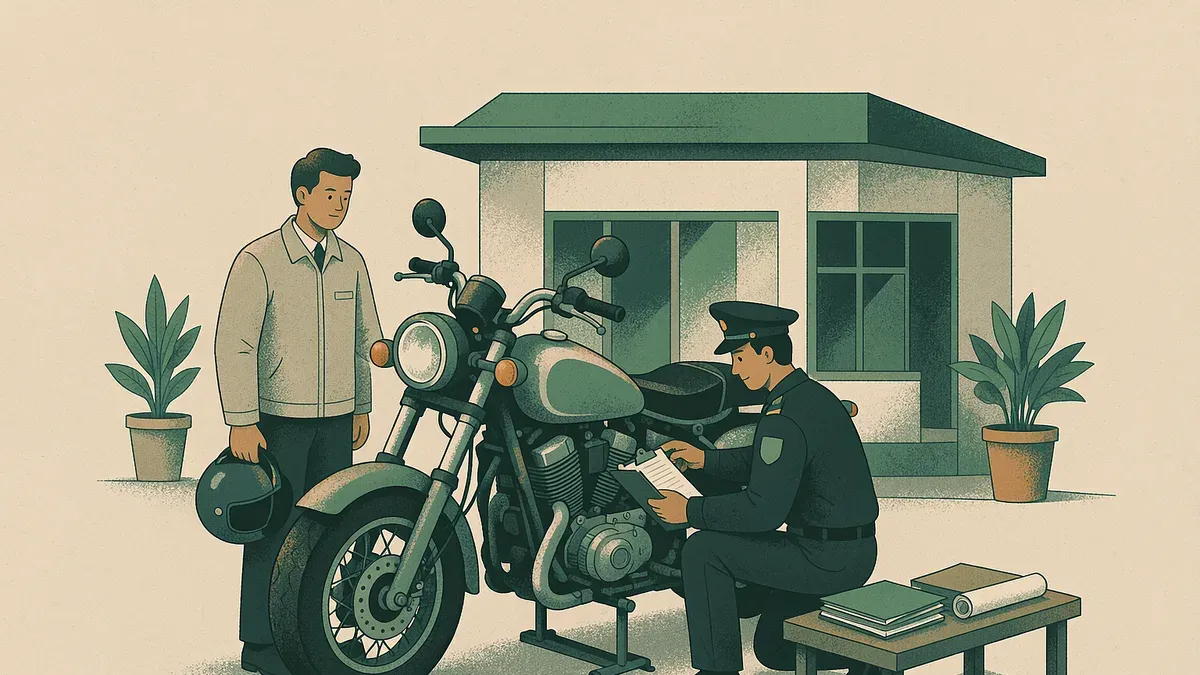
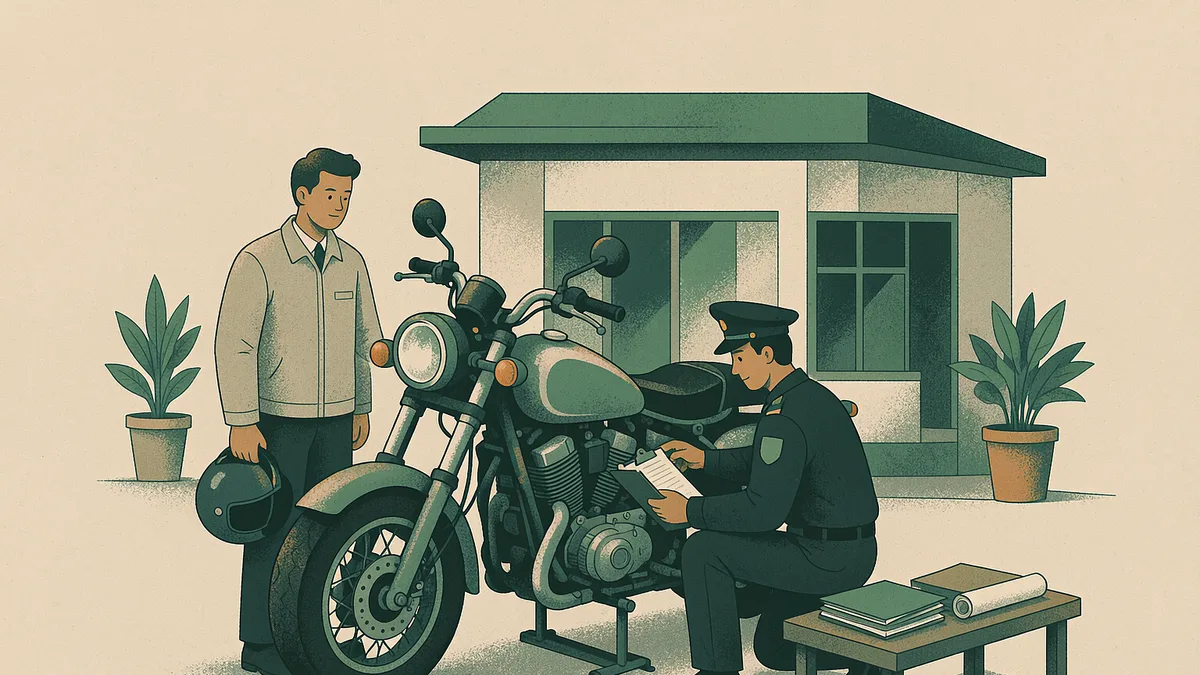
The inspector compares the numbers on the machine with the numbers on the file. On a motorcycle that means the frame stamp, usually on the headstock or steering tube, and the engine stamp, usually low on the crankcase behind the front wheel or under the gear lever.
- Clean both areas before the visit. Road grime and chain spray hide the digits, and an inspector who cannot read a number will ask for the vehicle to come back.
- Check the engine number against the invoice or customs paper digit by digit before leaving the workshop, particularly after an engine replacement.
- Present the machine complete, with the silencer, indicators, mirrors and both brakes fitted. A track bike with no lights is not a road vehicle for registration purposes.
- Fit the plate on its proper bracket at the rear. Plates bent around the mudguard or hidden under a luggage rack fail the check and attract a challan later.
- Bring the helmet and, where the province requires it, proof of insurance. Neither is part of the chassis check, but a missing document turns one visit into two.
A motorcycle that fails inspection is usually failed for something visible: a frame number that has been ground or re-stamped, an engine that does not match the paper, a missing silencer or a non-standard plate. A re-stamped frame is the serious case, because the office treats it as an identity problem rather than a repair.
Tax, insurance and licence
Registration starts a yearly obligation. Token tax is charged by capacity band, and some provinces offer a lifetime payment for private vehicles. Insurance is compulsory for certain classes and worth having on an expensive machine, since a theft or a slide is costly to absorb without cover.
The licence question comes up more often with larger bikes. A motorcycle licence covers the class, and engine capacity does not create a separate licence category in most provinces. What changes is the practical requirement: a rider coming from a 70cc commuter should take training before moving to a machine with three times the power.
Provincial practice decides the details. Punjab and Sindh register through district offices and their online portals, with biometric verification of the owner. Khyber Pakhtunkhwa works through the district registering authority. Balochistan follows the district route and may ask for a local attestation. Islamabad uses Form F and a fee formula that adds registration fee, advance tax, token tax and income tax.
Register the machine in your own name, keep the invoice and the customs papers with the file, and check the engine and frame numbers before the inspection. The capacity on the engine will set the bill, but the papers decide whether the case moves.