
Traffic Rules
Documents to Carry While Driving in Pakistan: Licence, Registration, Insurance, Token Tax and What to Do If One Is Lost
Key takeaways
- Carry licence, registration record, token tax proof, CNIC and insurance where required.
- Commercial vehicles also need a current fitness certificate and route permit.
- Apply for duplicates through the issuing authority and keep the reference.
- Keep scanned copies separately to speed up any replacement application.
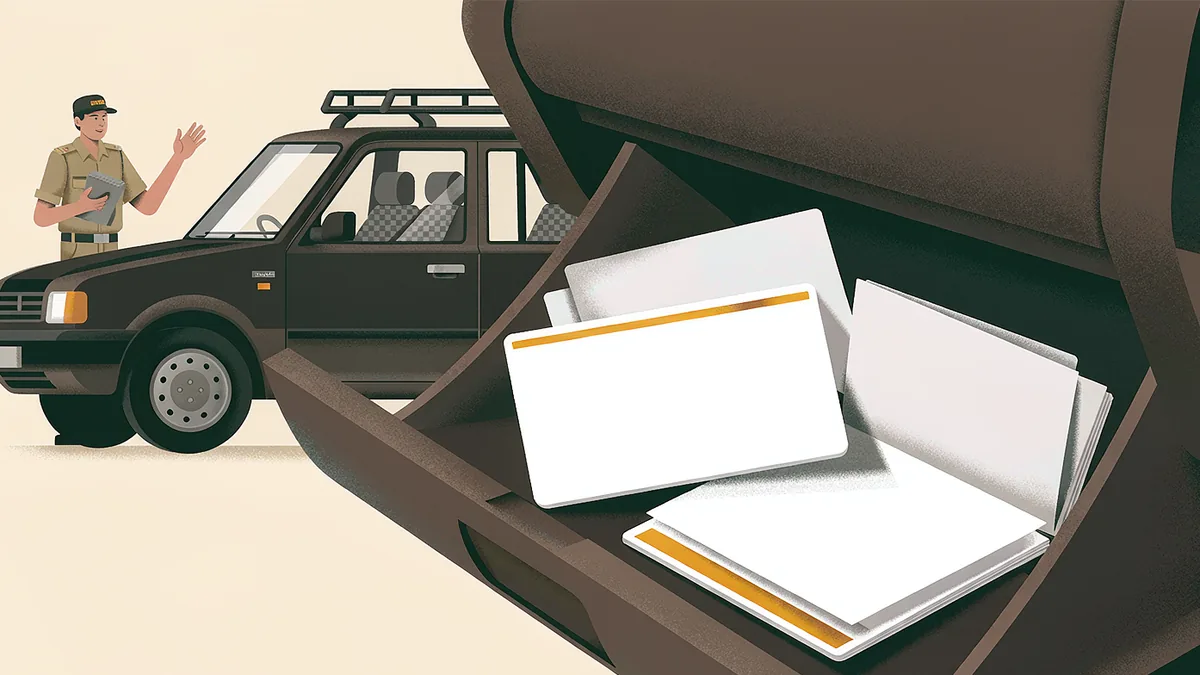
The documents a driver in Pakistan is expected to carry are the driving licence, the vehicle's registration record, insurance where it applies, token tax proof, and for commercial vehicles a current fitness certificate and route permit. Carrying them is not a technicality: at a checkpoint or after a collision, the documents are what establish that you are licensed to drive and that the vehicle is lawfully on the road.
The core documents for every driver
- Driving licence. A valid licence appropriate to the vehicle class you are driving. Carry the original or the smart card, and check the expiry date — an expired licence is treated as a document offence.
- Registration book or smart card. The vehicle's registration record, showing the registration number and the recorded owner.
- Token tax proof. Evidence that the annual road-use charge has been paid for the current period.
- Insurance documents. Where cover is required for the vehicle class or by provincial requirement, carry the current insurance certificate and note its expiry.
- CNIC. Your identity document, which also helps match a licence or challan record.
Extra documents for commercial and passenger vehicles
If the vehicle carries passengers or goods for payment, the document set is larger and is checked more closely.
| Document | Why it is checked |
|---|---|
| Fitness certificate | Shows the vehicle passed inspection and is roadworthy |
| Route permit | Shows the vehicle is authorised to operate on that route |
| Driver's licence with the correct class | Confirms the driver is licensed for that vehicle category |
| Token tax receipt | Confirms the annual road-use charge is current |
| Insurance certificate | Confirms third-party cover is in place |
| Consignment or passenger documentation | Where required for the goods or service being operated |
For commercial operators, an expired fitness certificate is as disruptive as a missing one. Track it alongside the route permit and token tax dates so nothing lapses unnoticed.
If a document is lost, stolen or damaged
Losing a document is common and there is a proper route for each case. Report the loss promptly and apply for a replacement through the authority that issued it — the licensing authority for a driving licence, and the provincial excise and taxation department for the registration record and token tax documents.
- Note the details. Write down what was lost, when and where, and the licence or registration number.
- File a report for stolen documents where that is required, and keep the report reference.
- Apply for a duplicate through the issuing authority, using your CNIC and any remaining identifying details.
- Keep the receipt or application reference while the replacement is being processed.
- Do not keep driving unlicensed. Until the replacement is in hand, arrange alternative transport rather than driving without the required documents.
Keeping copies that actually help
Keep a photographed or scanned copy of every document in a phone folder and in cloud storage, and keep paper photocopies in a separate place from the originals. Copies do not replace the original documents at a checkpoint, but they make a replacement application far faster and they help you prove what the document said.
At a checkpoint and after a collision
At a traffic checkpoint, an officer will normally ask for the licence and the registration record first, and may then check tax and fitness status where the vehicle class requires it. Being able to hand over an organised set of originals quickly keeps the stop short. Being unable to produce a document usually means the stop gets longer, not shorter.
After a collision, the same documents become evidence. Insurance claims, police reports and any assessment of fault all depend on records showing that the driver was licensed, that the vehicle was registered, and that tax and fitness were current at the time. A driver who cannot produce that paperwork immediately is in a weaker position than one who can, regardless of who caused the incident. This is the practical reason to keep the folder current rather than dealing with it only when a renewal notice arrives.
Set one reminder for every expiry date — licence, insurance, token tax and fitness — rather than relying on memory. A single folder with current documents and a calendar of renewal dates removes most of the stress from a checkpoint stop.
Keep reading
Traffic Challans in Pakistan: What Triggers One, How to Check and Pay an e-Challan, and How to Dispute a Wrong Entry
Understand how traffic challans work in Pakistan: what triggers an e-challan, how to check your vehicle or licence, how to pay and how to dispute one.
Seat Belt and Helmet Rules in Pakistan: Requirements for Drivers, Passengers, Children and Motorcyclists
Seat belt and helmet rules in Pakistan for drivers, front passengers, children and motorcyclists, plus the safety reasons behind each requirement.
Traffic Rules in Pakistan Every Driver Should Know: Signalling, Speed Limits, Right of Way and Mobile Phones
The core traffic rules in Pakistan explained: signalling, lane discipline, speed limits, roundabout right of way, pedestrian crossings and mobile phone use.