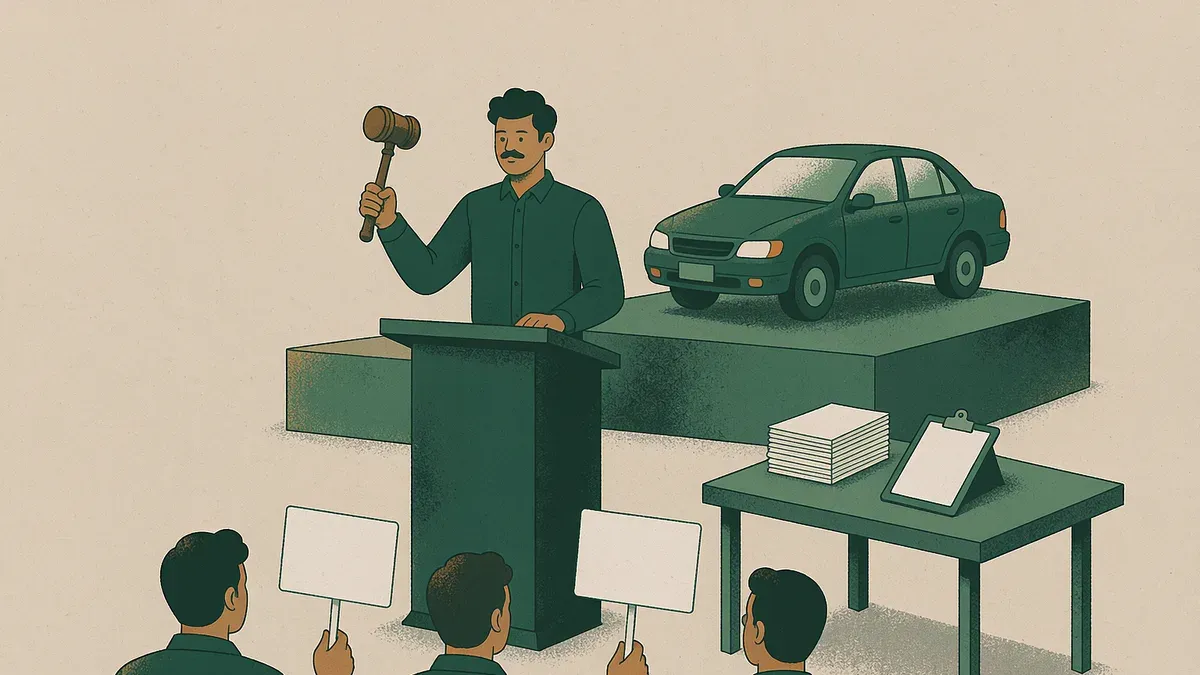
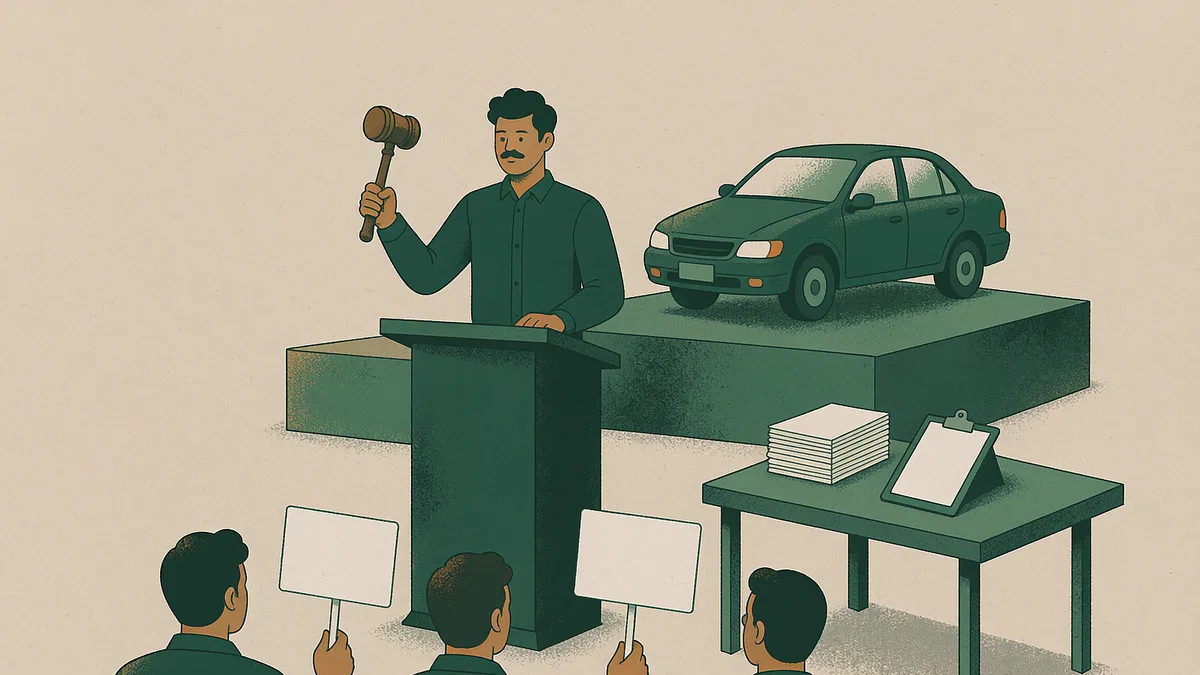
An auction vehicle arrives with a shorter paper trail than a private sale and a longer list of offices behind it. The auctioneer hands over the keys and a receipt, but the excise department still has to record you as the owner. This guide is for someone who has won a bank repossession, a provincial excise or police disposal, a customs sale, or a court-ordered sale, and now needs the registration book or smart card in their own name.
What kind of auction you bought from
Who sold the vehicle decides which document stands in for the seller. A provincial department disposing of a confiscated vehicle issues an authority letter to the registering authority. A bank must release its lien. Customs sells an imported vehicle that may never have been registered in Pakistan.
| Auction source | Document that proves the purchase | What the excise office needs next |
|---|---|---|
| Provincial excise or police disposal | Auction receipt, sale order and an authority letter to the registering authority | Authority letter, delivery order, CNIC, vehicle inspection |
| Customs auction | Auction voucher, bill of entry and duty-paid evidence | Auction voucher plus customs clearance; first registration if the vehicle was never registered |
| Bank repossession | Auction receipt, bank NOC and the registration book where the bank holds it | Transfer application, NOC, biometric verification, standard transfer papers |
| Court-ordered sale | Court sale order or sale certificate | Certified court order plus the normal transfer documents |
Islamabad’s excise department lists the auction voucher among the accepted proofs of purchase for an auctioned vehicle, alongside the application and the inspection report. Other provinces tend to ask for the voucher plus whatever letter the auctioning department issues, so keep both.
The paper chain that decides the file
An auction receipt shows that you paid. It does not show that the registered owner agreed to sell, which is what the excise record needs. An authority letter or sale order from the department, bank or court closes that gap. It names the buyer, the vehicle and the registration or chassis number, and asks the registering authority to record the change.
Without that letter, the file has no legal seller. A district office may hold the application while you go back to the auctioning department, and some departments set a registration deadline. One federal disposal framework has used a three-month window for the authority letter. Collect it before anything else.
If the vehicle already carries a Pakistani registration number, you are transferring it from the recorded owner, even when that owner is a government department. If it came through customs and was never registered here, there is nothing to transfer. The auction voucher takes the place of a sale invoice and you apply for first registration.
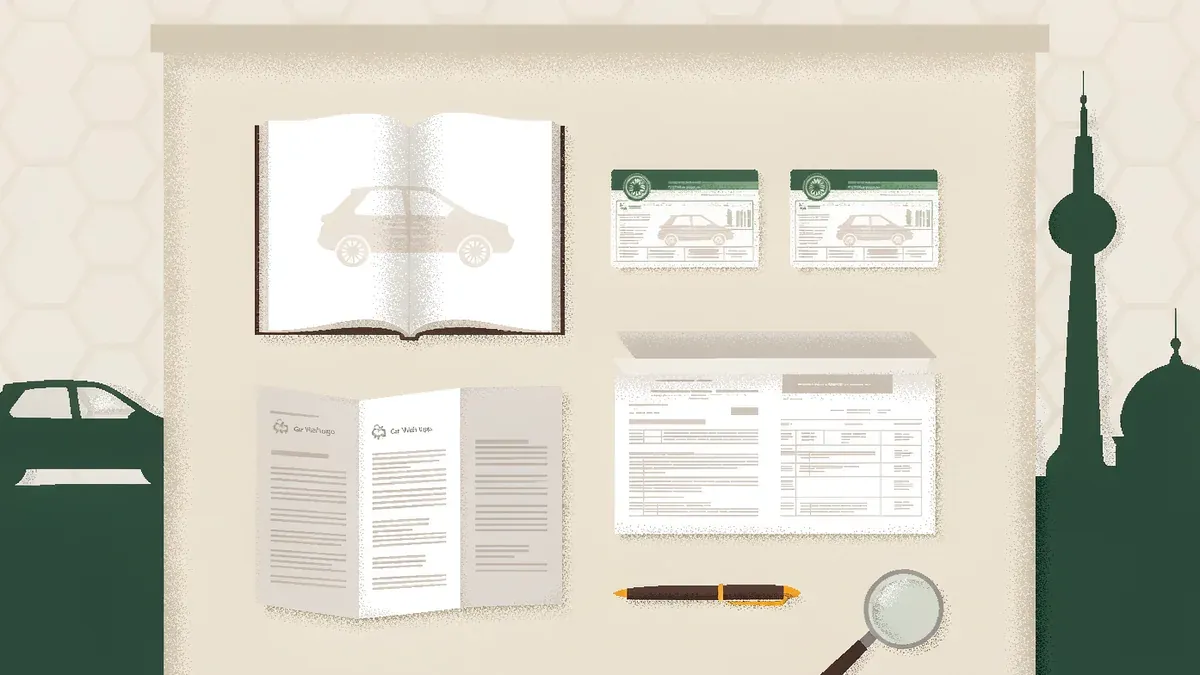
Documents to assemble
- Your CNIC, or NICOP if you live abroad, with the name spelled exactly as on the auction documents.
- The auction voucher or receipt, in your name, and the delivery order that let you take the vehicle.
- The authority letter, sale order or allotment letter addressed to the excise department.
- Customs documents for an imported vehicle: bill of entry, goods declaration, and proof that duty and sales tax were paid.
- The original registration book or smart card, when the vehicle was already registered, and a bank NOC where a lien was recorded.
- Proof of address accepted in the province, photographs, the registration application and a transfer deed where one is required.
Step by step after the hammer falls
- Read the auction terms before you bid. Check who pays customs duty, who handles registration, what deadline applies and whether the vehicle is sold as roadworthy or as scrap. A low price can leave the duty and the paperwork with you.
- Check the chassis and engine numbers against the catalogue before paying. Look for welding or restamping around the chassis plate. A tampered number can be refused registration even when the auction was lawful.
- Pay and collect every document the same day. Ask for the authority letter to the excise department, and check your name and the vehicle details before you leave the counter.
- Clear federal dues on an import. Customs duty, sales tax and withholding tax have to be settled before the excise office will treat the vehicle as lawfully imported.
- Clear provincial dues. Outstanding token tax and unpaid challans follow the vehicle. The excise office will usually add them to your payment slip rather than let the transfer proceed with dues outstanding.
- Book the physical inspection and take the vehicle. The inspector matches the chassis and engine to the file and checks that the vehicle is complete. Missing parts or a different engine number will stop the application.
- File the transfer or first registration, pay the assessed fee, and keep the receipt. The receipt is your proof of ownership until the card arrives.
- Collect the smart card, then note the token tax period. The first renewal can fall in the same year as registration.
Where the provinces differ
Punjab handles registration and transfer at the district excise office, with payment through an ePay Punjab PSID. A normal sale needs biometric verification from both sides. For a department disposal, the authority letter replaces the seller’s side, but the district office may still want the buyer’s biometrics. Ask before you pay.
Sindh runs registration through regional directorates in Karachi, Hyderabad, Sukkur, Larkana and Mirpurkhas. The published registration fee is a percentage of vehicle value, from 1 percent for cars up to 1000cc to 5 percent above 2500cc, with a separate transfer fee by engine capacity. An unregistered auction vehicle is assessed on value, so the voucher price matters.
Khyber Pakhtunkhwa disposes of confiscated vehicles under its seizure and disposal rules, through an auction committee. Customs dues are cleared from the sale proceeds before the balance goes to the provincial treasury. The buyer then registers at the district motor registering authority with the auction documents and the committee’s sale order.
Islamabad works from Form F, a physical inspection and a fee formula that adds registration fee, advance tax, token tax and income tax. A late fee applies after 60 days from the invoice date, which is easy to trigger when an auction file sits waiting for a letter.
Balochistan follows the district excise route. The document names are similar, but the office may want a different address proof or a local attestation. Confirm the list before travelling.
What can stop the file
A vehicle auctioned as scrap or condemned cannot be registered for road use, whatever the receipt says. A chassis number that has been cut, rewelded or restamped is another dead end. So is an auction invoice made out to a dealer or agent rather than to you. The excise office records the person named on the purchase document, and a correction later needs the dealer’s cooperation.
Unpaid token tax and challans are the most common delay. Buyers budget for the bid and the fee, then discover an arrear that has to be cleared before the transfer. Ask the auctioning department for a tax status printout, or run the registration number through the provincial check before you bid. An authority letter can also expire, and a department can take weeks to reissue one, so start the excise application as soon as you have it.